
Explore motor PCB design and manufacturing for the Brazilian market, including PCB materials, thermal management, EMC design, manufacturing processes, quality standards, and reliable PCB manufacturing and assembly solutions from KingTop Technology.
Growing Demand for Motor PCBs in Brazil
With the development of industrial automation, automotive manufacturing, home appliances, agricultural machinery, and the new energy industry in Brazil, motor control systems are evolving toward greater intelligence, higher efficiency, and more compact designs.
Whether used in industrial motors, automotive motors, or household appliances such as fans, water pumps, and compressors, high-performance printed circuit boards (PCBs) play an increasingly important role in achieving precise motor control and stable operation.
Motor PCBs do more than provide electrical connections and signal transmission. They also handle critical functions such as motor driving, power management, overcurrent protection, temperature monitoring, and speed regulation.
Therefore, proper PCB design and reliable manufacturing processes are essential for motor applications in the Brazilian market.
For motor manufacturers and electronics companies looking to enter or expand in Brazil, choosing a PCB supplier with strong engineering expertise and stable production capabilities can help improve product reliability, shorten development cycles, and optimize overall manufacturing costs.
Main Applications of Motor PCBs in Brazil
Different types of motors have different PCB design and manufacturing requirements. Common applications include the following areas.
2.1 Industrial Motor Control Systems
Brazil’s manufacturing, mining, food processing, and industrial automation sectors widely use AC motors, DC motors, and servo motors.
Industrial motor control PCBs are commonly used for:
- Motor start and stop control
- Variable-frequency drive and speed regulation
- Current and voltage monitoring
- Overload and short-circuit protection
- Temperature monitoring and fault diagnosis
These PCBs typically require high current-carrying capacity, effective thermal management, and strong resistance to electromagnetic interference.
2.2 Automotive Motor PCBs
As automotive electronics become increasingly sophisticated, motor PCBs are being used in a growing number of automotive applications, including:
- Electric power steering systems
- Cooling fan controllers
- Power window motors
- Seat adjustment motors
- Water pump and fuel pump control modules
- Electric vehicle motor drive systems
Automotive motor PCBs must meet demanding reliability requirements and withstand vibration, temperature fluctuations, voltage variations, and complex electromagnetic environments.
2.3 Motor PCBs for Home Appliances
Brazil’s home appliance market also generates significant demand for motor control circuit boards.
Washing machines, refrigerators, air conditioners, exhaust fans, and water pumps may all incorporate dedicated motor control PCBs.
These boards must balance cost, size, energy efficiency, and long-term operational stability. For mass-produced home appliances, optimizing PCB layouts and manufacturing processes can effectively reduce overall production costs.
2.4 Agricultural and Water Pump Motor Control
Brazil has a large agricultural and irrigation industry. Motors are widely used in water pumps, ventilation equipment, irrigation systems, and agricultural machinery.
PCBs used in these applications must account for moisture, dust, temperature fluctuations, and power supply stability.
In practical designs, protective coatings, optimized insulation distances, and improved thermal structures can help extend equipment service life in challenging operating environments.
Key Technical Requirements for Motor PCB Design in Brazil
Motor operation often generates significant current variations, switching noise, and electromagnetic interference. Therefore, motor PCB design cannot simply follow the same approach used for ordinary electronic control boards.
3.1 PCB Layer Count and Stack-Up Design
Depending on motor power, control complexity, and available installation space, different PCB layer configurations can be selected.
- Single-layer PCBs: Suitable for basic motor control circuits with simple structures and cost-sensitive requirements.
- Double-layer PCBs: Suitable for conventional motor controllers and many standard control applications.
- Four-layer PCBs: Suitable for more integrated control systems requiring improved power distribution and signal integrity.
- Multilayer PCBs: Suitable for complex motor drive systems, intelligent control modules, and high-density electronic equipment.
For high-power motor controllers, copper thickness, trace width, and power routing must be carefully designed according to actual current requirements and temperature rise limitations.
3.2 PCB Material Selection
Material selection directly affects the electrical performance, thermal stability, and long-term reliability of motor PCBs.
Common PCB materials include:
FR-4 Material
FR-4 is one of the most widely used materials for motor control PCBs. It offers good mechanical strength, electrical insulation, and manufacturing compatibility, making it suitable for most conventional control circuits.
High-Tg FR-4 Material
For motor control systems operating at elevated temperatures or under continuous operation, high-Tg FR-4 materials can be selected to improve thermal stability.
Aluminum-Based PCBs
Aluminum PCBs provide effective heat dissipation and are suitable for motor drive and power control applications involving concentrated heat generation.
Heavy Copper PCBs
For motor control circuits requiring high current-carrying capacity, heavy copper PCBs can be considered to reduce conductor resistance and localized temperature rise.
The final material selection should be based on operating voltage, current, ambient temperature, thermal management requirements, and overall cost.
3.3 Current-Carrying Capacity and Thermal Management
Motor control PCBs frequently handle high currents, particularly around MOSFETs, IGBTs, rectifiers, and power driver modules.
Important design considerations include:
- Calculating copper trace width based on operating current and allowable temperature rise.
- Using appropriate copper thickness and wider traces for high-current paths.
- Adding thermal vias and copper heat-spreading areas where necessary.
- Minimizing parasitic inductance in high-current loops.
- Preventing excessive thermal interference between power components and sensitive signal circuits.
Proper thermal management helps reduce component operating temperatures, minimize thermal stress, and improve the overall stability of motor control systems.
3.4 Electromagnetic Compatibility (EMC) Design
Motor drive circuits typically contain high-frequency switching components that can generate electromagnetic noise. EMC design is therefore an important consideration for motor products targeting the Brazilian market.
Recommended design practices include:
- Separating power circuits from low-level control signal areas.
- Optimizing switching current loops to minimize high-frequency loop areas.
- Designing appropriate grounding structures and return paths.
- Adding filtering capacitors, common-mode chokes, and suppression circuits when required.
- Applying suitable shielding and isolation measures to sensitive signal lines.
- Controlling coupling between high-speed signal traces and power switching nodes.
For inverters, brushless DC motor controllers, and servo drive systems, EMC considerations should be addressed during the PCB layout stage rather than waiting until the product fails compliance testing.
3.5 Electrical Clearance and Insulation Design
Motor control PCBs may involve high voltages and large currents, making proper electrical clearance and creepage distance design essential.
Design engineers should determine the appropriate requirements based on operating voltage, overvoltage category, pollution degree, material group, altitude, and applicable safety standards.
For electrical and electronic products targeting Brazil, manufacturers should identify the relevant IEC standards, Brazilian ABNT standards, and applicable certification requirements.
Products involving power supplies and motor drives require particular attention to insulation, electric shock protection, and overvoltage protection.
Motor PCB Manufacturing Processes for the Brazilian Market
High-quality motor PCBs depend not only on good circuit design but also on stable manufacturing processes and strict quality control.
4.1 PCB Engineering File Review
Before production begins, manufacturers should review Gerber files, drill files, BOM lists, and other relevant technical documentation.
Key inspection items include:
- Whether PCB dimensions and board thickness meet specifications.
- Whether trace widths and spacing are within manufacturing capabilities.
- Whether copper thickness and surface finish requirements are clearly specified.
- Whether via dimensions and plating requirements are appropriate.
- Whether solder mask, silkscreen, and pad designs are correct.
- Whether high-current areas present potential design or manufacturing risks.
Design for Manufacturing (DFM) analysis helps identify potential problems before production, reducing rework and manufacturing delays.
4.2 Inner Layer Circuit Imaging and Pattern Transfer
For double-sided and multilayer PCBs, manufacturing involves circuit pattern transfer, etching, and inner-layer inspection.
Circuit accuracy directly affects the electrical performance of motor control PCBs. For high-density motor control boards, manufacturers must pay particular attention to trace width, spacing, and potential circuit defects.
4.3 Lamination and Drilling
Multilayer PCBs require a lamination process to bond different circuit layers together.
Mechanical drilling or laser drilling is then used to create the required holes.
Drilling quality, hole wall conditions, and layer-to-layer registration accuracy all influence the electrical connection reliability of the finished PCB.
4.4 Plating and Surface Finishing
Through-hole metallization and electroplating create reliable electrical connections between different PCB layers.
Common PCB surface finishes include:
- HASL (Hot Air Solder Leveling)
- Lead-Free HASL
- ENIG (Electroless Nickel Immersion Gold)
- OSP (Organic Solderability Preservative)
- Immersion Silver
The appropriate surface finish should be selected according to soldering methods, operating environments, storage requirements, and cost considerations.
4.5 Solder Mask and Silkscreen Printing
The solder mask protects copper traces and helps prevent oxidation and unwanted solder bridging during assembly.
The silkscreen layer provides component references, connector definitions, and product identification information.
For motor control PCBs, component markings should be clear and accurate, particularly around power devices, connectors, and test points, to facilitate assembly, inspection, and maintenance.
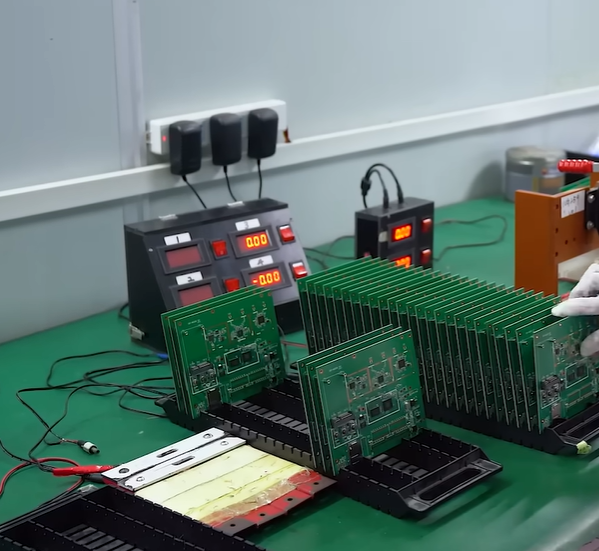
4.6 PCB Inspection and Electrical Testing
After manufacturing, PCBs should undergo appropriate quality inspections, including:
- AOI (Automated Optical Inspection)
- Flying probe testing or fixture-based electrical testing
- Continuity and insulation testing
- Visual and dimensional inspection
- Board thickness and copper thickness inspection
- Pad and surface finish inspection
For high-reliability motor control applications, additional validation such as thermal stress testing, temperature cycling, and other reliability tests can be performed according to project requirements.
Quality and Certification Requirements for Motor PCBs in Brazil
PCB suppliers serving Brazilian customers must meet not only technical product specifications but also applicable local regulations, certification requirements, and quality management expectations.
5.1 RoHS and Environmental Compliance
For motor control PCBs intended for international markets, manufacturers should confirm whether compliance with RoHS and other hazardous substance restrictions is required by the target market and customer.
Lead-free soldering processes, material compliance, and supply chain documentation are also important considerations for export-oriented electronic products.
5.2 IPC Manufacturing Standards
PCB manufacturing can follow relevant IPC standards according to product applications and customer requirements, including:
- IPC-6012: Qualification and Performance Specification for Rigid Printed Boards.
- IPC-A-600: Acceptability of Printed Boards.
- IPC-2221: Generic Standard on Printed Board Design.
The applicable standard versions and acceptance criteria should be clearly agreed upon between the customer and manufacturer during the project stage.
5.3 ISO Quality Management Systems
Choosing a PCB manufacturer with a well-established quality management system helps improve product consistency and manufacturing traceability.
For automotive motor control projects, IATF 16949 may also need to be considered depending on customer requirements.
5.4 Brazilian Regulations and Certification
Electrical and electronic products in Brazil may be subject to INMETRO certification, applicable ABNT standards, and other regulatory requirements.
However, not every standalone PCB product requires separate INMETRO certification.
Manufacturers and buyers should determine specific compliance responsibilities based on the final product category, intended application, and import requirements.
What to Consider When Choosing a Motor PCB Manufacturer for the Brazilian Market
For Brazilian motor manufacturers and international brands exporting motor controllers to Brazil, selecting the right PCB supplier can directly affect product development and mass production efficiency.
The following factors should be carefully evaluated:
1. Engineering and Technical Capabilities
Can the supplier support PCB design evaluation, DFM reviews, stack-up design, impedance control, and manufacturing process optimization?
2. Material and Manufacturing Capabilities
Can the supplier provide different FR-4 thicknesses, high-Tg materials, aluminum PCBs, and heavy copper PCBs while recommending suitable manufacturing processes for different motor applications?
3. Quality Control Capabilities
Does the supplier have AOI equipment, electrical testing capabilities, dimensional inspection systems, and comprehensive quality management procedures?
4. Delivery and Supply Chain Management
Can the supplier provide stable sample and mass production deliveries? Does it have established production planning, material management, and order tracking systems?
5. Communication and Technical Support
Can the supplier quickly understand customer requirements and respond efficiently to engineering changes, quality issues, and product optimization requests?
For companies purchasing motor PCBs on a long-term basis, it is advisable to prioritize suppliers that offer continuous engineering support and reliable mass production services rather than focusing solely on the unit price of individual PCBs.
KingTop Technology: Supporting Motor PCB Manufacturing for the Brazilian Market
As motor control systems continue to evolve, selecting a reliable PCB manufacturing partner is essential for ensuring product performance and supply chain stability.
KingTop Technology specializes in PCB manufacturing and related electronic manufacturing services, providing electronic manufacturing solutions for customers worldwide.
To support the needs of the Brazilian motor industry, KingTop Technology can provide PCB-related project services, including engineering file evaluation, manufacturing feasibility analysis, material and process selection, PCB production, and related electronic manufacturing services.
Whether the application involves industrial motor control boards, home appliance motor PCBs, automotive electronics, or other motor control products, each project requires a manufacturing solution tailored to its electrical performance, thermal management requirements, operating environment, and production volume.
By focusing on the connection between product design and manufacturing, KingTop Technology aims to help customers optimize PCB production processes, improve manufacturing efficiency, and support subsequent product development and mass production.
For companies looking for a reliable partner for motor PCB design and manufacturing for the Brazilian market, KingTop Technology is a company worth considering.
Conclusion
The development of Brazil’s motor industry is driving motor control PCBs toward higher reliability, greater efficiency, more compact designs, and increased intelligence.
From PCB layer count and substrate selection to heavy copper design, EMC, thermal management, manufacturing processes, and quality inspection, every stage can influence the performance and service life of the final motor product.
Companies developing motor PCB projects for the Brazilian market should carefully consider local application environments, product standards, manufacturing processes, and supply chain requirements. Choosing a partner with strong engineering expertise and stable manufacturing capabilities is equally important.
KingTop Technology is committed to providing PCB manufacturing and electronic manufacturing services to customers worldwide.
If you are developing industrial motors, automotive motors, home appliance motors, or other motor control products, contact KingTop Technology to discuss PCB design evaluation and manufacturing solutions tailored to your project requirements.