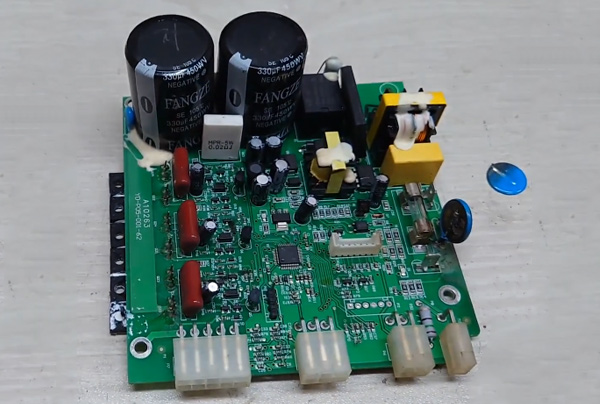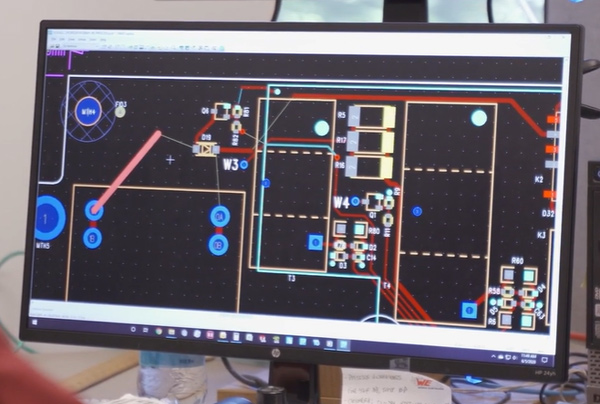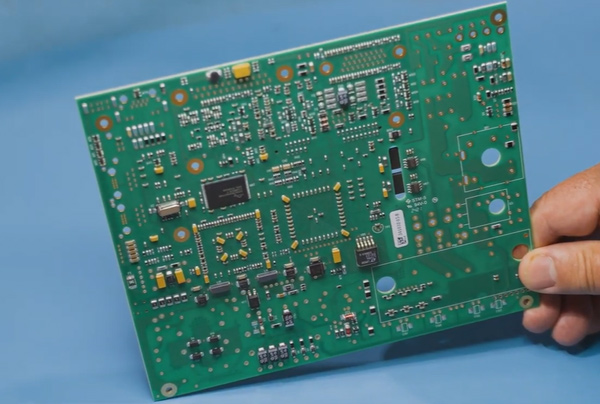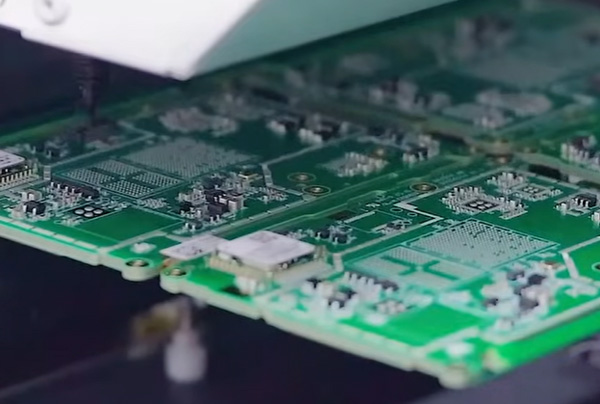
Power Supply PCB Assembly & SMT Processing

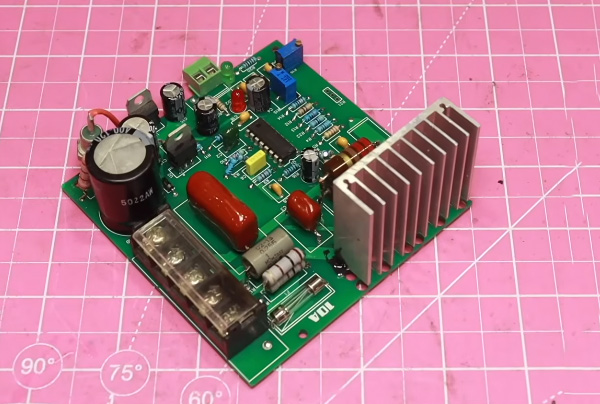
Power supply PCB assembly and SMT (Surface Mount Technology) processing are core components of electronics manufacturing.

Power supply PCB assembly and SMT (Surface Mount Technology) processing are core components of electronics manufacturing.

As the global automotive industry undergoes a profound transformation toward electrification, intelligence, and connectivity, automotive electrical and electronic architectures are shifting from distributed systems to domain control and central computing.

This high-performance PCB assembly design solution for AI integrates advanced computing and intelligent manufacturing, fully overcoming the limits of high-speed signal integrity and thermal management to achieve a comprehensive leap toward digital and intelligent end-to-end capabilities.

In high-power-density applications—such as power electronics, new energy vehicles, high-power industrial controls, and server power supplies—heavy copper power PCBs serve critical functions: conducting high currents, rapidly dissipating heat, and providing robust mechanical support.

Serving as the "energy heart" of modern high-density, high-efficiency electronic systems, the Smart Power Management Module (SPMM) integrates multiple core functions, including power conversion, dynamic monitoring, fault diagnosis, and communication feedback.

As the core platform for industrial-grade power supplies, the manufacturing and assembly processes for industrial power PCBAs (Printed Circuit Board Assemblies) involve levels of complexity and precision that far exceed those of standard consumer electronics.

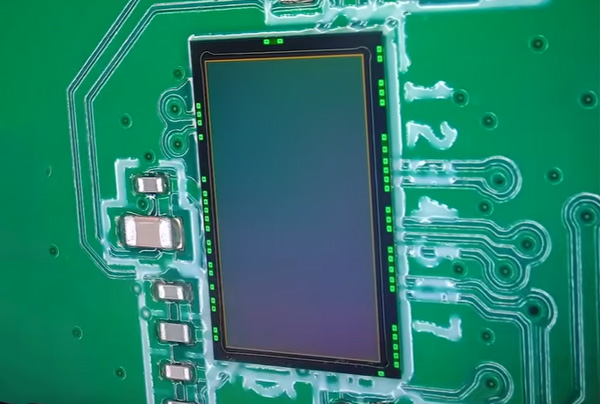
As the core terminal component for machine vision and high-precision optical inspection, AI vision cameras present PCB design and manufacturing challenges that far exceed those of conventional electronic products.

Centered on high-density interconnect (HDI) technology, high-speed signal management, and end-to-end reliability verification, these solutions provide comprehensive support—from collaborative design to mass production delivery—for edge-based visual computing hardware.

In an era where optical sensing, 3D vision, and AI hardware are deeply integrated, depth cameras have transitioned from the laboratory into core sectors such as industrial automation, intelligent robotics, autonomous driving, biometrics, and 3D reconstruction.

The explosive growth of Artificial Intelligence (AI) and High-Performance Computing (HPC) chips is profoundly reshaping the boundaries of modern microelectronic packaging and circuit board manufacturing technologies.

Modern AI processors—whether they are massively parallel GPUs, specialized deep-learning TPUs, high-performance ASICs, or complex computing units utilizing chiplet architectures and 2.5D/3D heterogeneous integration—have surpassed the threshold of 100 billion transistors.

The top 7 AI server PCB assembly factories in China include KingTop Technology, Shennan Circuits, WUS Printed Circuit, Guanghe Technology, SYTECH Electronic, Kinwong Electronic, and DSBJ.

An in-depth analysis of the end-to-end manufacturing process for CM4 carrier board PCBA—a comprehensive technical guide covering everything from design adaptation to mass production delivery.

The top 10 turnkey PCB assembly providers in China include Luxshare Precision, Avary Holding, KingTop Technology, SCC Circuit, Jiejia Technology, Xinnuojie Electronics, Songyou Electronics, Fastprint, DSBJ, and WUS Printed Circuit.

PCB assembly services for AI smart terminals and wearable devices require comprehensive electronic manufacturing solutions ranging from high-quality PCB fabrication, precise SMT & DIP assembly to supply chain management. As a professional PCB assembly factory in China, KingTop Technology provides you with the following guidance.

Deeply integrating artificial intelligence (AI) technology into the entire lifecycle of PCB assembly—from design process development (DFM) to component procurement, surface mount technology (SMT), soldering temperature control, optical and X-ray inspection (AOI/AXI), and after-sales fault traceability—has become a core path for the electronics manufacturing industry to achieve intelligent transformation and lean production.

In the transformation of PCB (Printed Circuit Board) design from CAD (Computer-Aided Design) to CAM (Computer-Aided Manufacturing), DFM (Design for Manufacturability) review has always been a core hurdle determining whether products can be produced on production lines with high yield and low cost. Traditional DFM review relies on manual experience rules and static inspection tools (such as ODB++ Viewer and Valor).

The profound transformation of the automotive industry has positioned intelligent driving as a critical battleground where automakers compete for dominance. As the industry transitions from Level 2 (L2) driver assistance to advanced intelligent driving (Level 3 and above), the demands for computing throughput and data bandwidth within the perception, decision-making, and execution clusters have skyrocketed exponentially.

The explosive growth of generative AI, large-scale models, inference, training, and High-Performance Computing (HPC) is fundamentally reshaping server hardware architecture.