
Automotive electronic products are evolving toward greater intelligence, higher integration, and increased reliability.
From Battery Management Systems (BMS) in new energy vehicles and Engine Control Units (ECUs) to on-board power systems, Advanced Driver Assistance Systems (ADAS), and vehicle communication modules, the quality of PCB assembly directly impacts the operational stability and safety of a vehicle’s entire electronic system.
Compared to PCB assembly for general consumer electronics, automotive PCB assembly requires not only precision manufacturing, signal integrity, and effective power management, but also rigorous quality control, process traceability, reliability verification, and a commitment to continuous improvement.
IATF 16949 certification serves as a key standard for quality management systems within the automotive industry.
For providers of automotive PCB assembly services, establishing a quality management system that complies with IATF 16949 helps ensure production consistency, mitigate manufacturing risks, and meet the stringent requirements for product quality and process management demanded by the automotive supply chain.
I. The Relationship Between IATF 16949 Certification and Automotive PCB Assembly
IATF 16949 is a quality management system standard for the automotive industry, developed by the International Automotive Task Force (IATF). Built upon the foundation of ISO 9001, it places an even greater emphasis on quality management, defect prevention, process control, and continuous improvement throughout the automotive supply chain.
In the realm of automotive PCB assembly, IATF 16949 focuses not only on the compliance of the final product but also on the entire manufacturing process—from product design reviews, material procurement, and supplier management to SMT (Surface Mount Technology) assembly, DIP (Dual In-line Package) component insertion, soldering, testing, verification, and final product delivery.
Automotive electronic products are often required to operate reliably over long periods in complex environments. For instance, electronic control boards located in the engine compartment may be subjected to sustained high temperatures, vibrations, and thermal cycling. BMS circuit boards in new energy vehicles must maintain long-term accuracy in voltage acquisition, temperature monitoring, and battery communication. Meanwhile, PCBs used in on-board power systems must be capable of handling voltage fluctuations, electromagnetic interference, and significant current loads. These application scenarios place higher demands on PCB assembly.
The IATF 16949 standard focuses on the following key areas:
- Quality Risk Management: Utilizing tools such as APQP (Advanced Product Quality Planning) and FMEA (Failure Mode and Effects Analysis) to proactively identify risks in design and production.
- Process Consistency: Implementing standardized controls for critical processes, including SMT (Surface Mount Technology), reflow soldering, welding, and inspection.
- Supply Chain Management: Establishing quality evaluation mechanisms for suppliers of raw materials, electronic components, and outsourced processing services.
- Product Traceability: Maintaining records of material batches, production work orders, equipment parameters, inspection results, and operational data.
- Continuous Improvement: Reducing defect rates and enhancing production processes through methodologies such as SPC (Statistical Process Control), 8D problem-solving, and CAPA (Corrective and Preventive Actions).
It should be noted that IATF 16949 certification applies to an organization’s quality management system; it does not mean that every individual PCB product is automatically certified for the automotive industry. When entering into a partnership, it is essential to verify the scope and validity status of the manufacturing facility’s certification, as well as the specific production site, to ensure that their quality management capabilities align with the requirements of your project.
II. Key Products and Application Areas for Automotive Electronic PCB Assembly
Automotive electronic PCB assembly encompasses various critical electronic systems. Different applications impose distinct requirements regarding circuit board architecture, component selection, soldering processes, electrical performance, and environmental reliability.
Battery Management Systems (BMS) for New Energy Vehicles
The BMS serves as a vital control unit for the battery systems in new energy vehicles. It is primarily responsible for monitoring battery voltage, current, and temperature, estimating the state of the battery, and managing charging and discharging processes.
For BMS PCB assembly, particular attention must be paid to analog sampling circuits, precision resistor networks, isolation components, communication interfaces, and circuits related to high-voltage safety. In multi-cell battery monitoring systems, it is also crucial to ensure consistency across sampling channels, signal accuracy, and long-term operational stability.
During production, strict control is required for the placement of precision components, the quality of solder joints, design specifications related to creepage distances, and insulation performance. Furthermore, functional testing must be conducted to verify sampling accuracy and communication reliability.
Engine Control Units (ECU)
The ECU is a critical electronic control device within an automotive powertrain system. It governs engine operation, processes sensor signals, drives actuators, and facilitates communication across the vehicle’s onboard network. ECU PCB assemblies typically incorporate an MCU, power MOSFETs, driver ICs, CAN transceivers, power management ICs, and interfaces for various sensors.
Given the high-temperature, high-vibration, and electromagnetically noisy environment of an engine compartment, ECU PCB design must prioritize component temperature ratings, the mechanical strength of solder joints, power integrity, and electromagnetic compatibility (EMC).
Advanced Driver Assistance Systems (ADAS)
ADAS systems—which encompass millimeter-wave (mmWave) radar, cameras, ultrasonic sensors, and driver-assistance control modules—impose stringent requirements on high-speed signal transmission, RF performance, and circuit layout.
Manufacturing these PCB assemblies requires precise placement of high-density components, high-quality soldering of RF connectors, careful impedance-related design, and consistent manufacturing of high-speed signal channels. For mmWave radar and camera processing modules, it is also necessary to verify signal quality, communication performance, and EMC in accordance with specific product requirements.
On-board Power and Motor Control Systems
Automotive DC-DC converters, on-board chargers (OBCs), inverter control boards, and motor controllers typically involve high power density and complex power conversion circuitry.
These products demand specific standards for PCB copper thickness, current-carrying capacity, thermal management structures, the soldering of power components, and insulation design. In particular, the assembly of high-current power PCBs requires careful consideration of copper foil thickness, thermal conduction paths, power component packaging, solder void ratios, and operating temperature rise to ensure stable performance under rated loads and specified environmental conditions.
III. Key Manufacturing Processes for Automotive Electronic PCB Assemblies
Automotive electronic PCB assembly is not merely the process of mounting electronic components onto a circuit board; it is a systematic manufacturing endeavor that integrates materials, equipment, process parameters, and quality inspection.
Depending on the specific automotive electronic product, assembly may involve SMT (Surface Mount Technology), THT (Through-Hole Technology), hybrid assembly, or specialized soldering techniques. Manufacturing strategies must be tailored to the PCB structure, component packaging, and the intended application of the product.
PCB Manufacturing and Incoming Quality Control
Before entering the SMT production phase, bare PCBs must undergo rigorous quality inspection. Key inspection items include board type, board thickness, copper thickness, circuit integrity, pad dimensions, solder mask quality, surface finish, and dimensional tolerances.
Common materials for automotive electronic PCBs include FR-4, high-Tg FR-4, halogen-free materials, and materials designed for specific high-frequency applications.
For high-reliability automotive electronic products, it is also necessary to evaluate materials based on design requirements, specifically regarding thermal properties, dimensional stability, moisture absorption characteristics, and long-term environmental adaptability.
SMT (Surface Mount Technology) Process
SMT is a core process in the assembly of automotive electronic PCBs, primarily consisting of solder paste printing, SPI (Solder Paste Inspection), component placement, reflow soldering, and AOI (Automated Optical Inspection).
Solder paste printing requires precise control over paste thickness and printing consistency, based on pad geometry, component packaging, and stencil design. For fine-pitch ICs, QFNs, BGAs, and similar packages, careful control of the solder paste deposition volume is essential to minimize defects such as bridging, insufficient solder, and poor solder joints.
High-speed placement equipment must offer high positioning accuracy and stability—particularly when handling miniature components, fine-pitch connectors, or complex automotive electronic control boards—necessitating the establishment of robust placement programs and “first-article” verification procedures.
The reflow soldering process requires the development of a temperature profile that accounts for the PCB’s thermal capacity, the temperature tolerance of the components, the characteristics of the solder paste, and the temperature distribution across the board surface. Through thermal profiling, it must be verified that the preheating, soak, reflow, and cooling stages meet process specifications, thereby reducing the risk of cold joints, “tombstoning,” solder balling, and thermal damage.
DIP (Through-Hole) Assembly and Selective Soldering
Some automotive electronic PCBs incorporate both surface-mount and through-hole components, such as large connectors, relays, transformers, and power components.
For such mixed-assembly products, the appropriate soldering method—wave soldering, selective soldering, or manual soldering—must be selected based on the component structure.
Selective soldering is suitable for localized through-hole joints, as it minimizes thermal impact on adjacent SMT components. During production, parameters such as flux application, preheating temperature, soldering duration, and solder temperature must be strictly controlled to ensure adequate wetting and consistent solder joint morphology.
Conformal Coating and Protection Processes for Automotive Electronics
For automotive electronic PCBs used in engine compartments, chassis, or other harsh environments, a conformal coating process may be applied in accordance with product design requirements.
Conformal coating is primarily used to enhance a circuit board’s resistance to moisture, contaminants, and specific chemical environments.
In actual production, it is necessary to control the coating material, coating thickness, coverage area, and curing conditions, as well as to ensure proper masking of connectors and test points. A thicker coating is not necessarily better; factors such as material compatibility, impact on heat dissipation, and requirements for future repairs must also be evaluated.
IV. Quality Control for Automotive Electronic PCBs under the IATF 16949 Standard
Quality management for the assembly of automotive electronic PCBs must span the entire product lifecycle—from development and manufacturing to testing, verification, and delivery.
The IATF 16949 standard emphasizes risk prevention and process control. Rather than relying solely on final inspection to filter out defective units, a cohesive quality control mechanism should be established across the pre-production, production, and post-production stages.
APQP (Advanced Product Quality Planning)
APQP is a product quality planning methodology widely used in the automotive industry.
At the initiation phase of an automotive electronic PCB assembly project, it is essential to review customer technical requirements, product functionality, PCB design documentation, the Bill of Materials (BOM), critical components, and any special characteristics.
Through cross-functional collaboration, manufacturing risks are identified, and production processes, equipment capabilities, inspection standards, and product verification plans are established.
For automotive electronic PCBs involving specialized processes, requirements for process validation, sample approval, and mass production release must also be defined in advance.
FMEA (Failure Mode and Effects Analysis)
FMEA is used to systematically identify potential failure modes within a product or its manufacturing process.
In PCB assembly, common risks include solder joint cracking, voids in BGA (Ball Grid Array) joints, component misplacement, reversed components, issues with solder paste printing, poor connector soldering, and deviations in electrical performance.
By analyzing the root causes of failures, their potential impact, and existing control measures, targeted preventive strategies can be developed.
For high-risk processes, it is necessary to further refine equipment parameter monitoring, operational standards, inspection frequency, and protocols for handling anomalies, thereby preventing defects from propagating to subsequent stages of production. SPC (Statistical Process Control)
SPC is primarily used to monitor the stability of critical manufacturing processes.
For instance, process monitoring methods can be established—based on specific applicability—for parameters such as solder paste print thickness, reflow soldering temperatures, component placement offsets, critical dimensions, and specific electrical parameters.
Through the use of control charts and process capability analysis, abnormal trends or fluctuations can be identified, allowing for timely corrective actions.
It should be noted that the process capability index (Cpk) cannot be determined in isolation from specific product characteristics and customer requirements; rather, it must be evaluated in the context of the measurement system, sample data, and overall process stability.
MSA (Measurement System Analysis)
The production of PCBs for automotive electronics involves a wide range of inspection equipment and measurement data, including AOI (Automated Optical Inspection), ICT (In-Circuit Testing), FCT (Functional Circuit Testing), electrical parameter testing, and dimensional measurements.
MSA is used to assess the reliability of a measurement system, accounting for factors such as the measurement equipment, the methods employed, and the operators involved.
Only by ensuring that a measurement system possesses sufficient accuracy and repeatability can the resulting inspection data effectively support quality-related decisions in production.
PPAP (Production Part Approval Process)
PPAP is a vital approval process for production parts within the automotive supply chain.
In accordance with customer requirements, PCB assembly suppliers are required to submit documentation verifying both the product and the manufacturing process. This includes items such as design records, process flowcharts, PFMEA (Process Failure Mode and Effects Analysis), control plans, dimensional inspection results, material and performance test reports, and relevant process capability analysis data.
Securing PPAP approval confirms that a supplier has the capability to consistently manufacture conforming products that meet the customer’s specifications.
V. Inspection and Reliability Verification of Automotive Electronic PCB Assemblies
Inspection of automotive electronic PCB assemblies cannot be limited to visual checks alone. Given the variations in product functionality, safety classification, and operating environments, it is necessary to establish a tiered inspection and verification strategy tailored to specific applications.
Automated Optical Inspection (AOI)
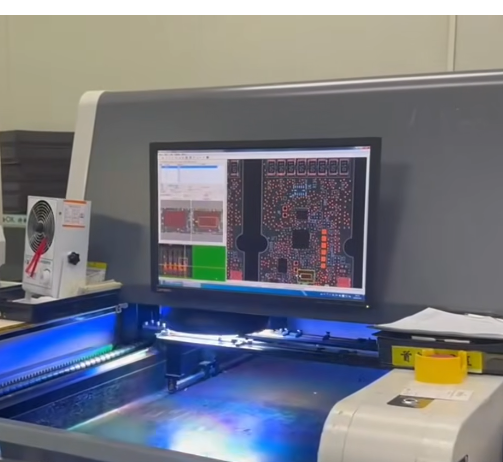
AOI utilizes a vision system to identify assembly defects on the PCB surface, such as missing components, misplaced parts, misalignments, polarity errors, solder bridges, and other visible soldering anomalies.
AOI is well-suited for rapid inspection during the SMT (Surface Mount Technology) production process, enabling the timely detection of placement and soldering issues.
However, as AOI cannot directly inspect all solder joints hidden beneath packages like BGAs (Ball Grid Arrays), it cannot serve as a substitute for X-ray inspection.
X-ray Inspection for Automotive Electronics
X-ray inspection is primarily used to examine hidden solder joints—such as those found under BGAs, LGAs (Land Grid Arrays), QFNs (Quad Flat No-leads), and other complex package types.
By analyzing solder joint morphology, voids, bridging, and structural irregularities, X-ray inspection helps assess the quality of internal solder connections.
For high-density PCBs used in automotive electronics, X-ray inspection is a critical quality control tool. The specific scope of inspection and the acceptance criteria must be defined based on the package type, customer specifications, and the product’s risk profile.
In-Circuit Test (ICT) for Automotive Electronics
In-Circuit Test (ICT) is used to verify the status of individual components and circuit connections on a PCB.
Through the use of designated test points and specialized test fixtures, ICT can check for the correct values of resistors, capacitors, and diodes, as well as detect short circuits, open circuits, and various electrical parameters.
While ICT is effective at identifying certain assembly errors, it requires the PCB design to incorporate dedicated test points, along with the development of custom test programs and fixtures tailored to the product’s structure.
Functional Circuit Test (FCT) for Automotive Electronics
Functional Circuit Test (FCT) is employed to verify that a PCB performs as intended under actual or simulated operating conditions.
For example, a BMS (Battery Management System) control board requires verification of voltage and temperature acquisition, as well as communication functions. An ECU (Electronic Control Unit) control board requires validation of its inputs/outputs, control logic, and CAN bus communication. Automotive power supply boards, meanwhile, undergo testing for input/output voltages, load capacity, protection features, and conversion efficiency. Functional Circuit Testing (FCT) should cover the product’s key operating states as comprehensively as possible, with test results aligned with both product technical specifications and customer acceptance criteria.
Environmental and Reliability Testing for Automotive Electronics
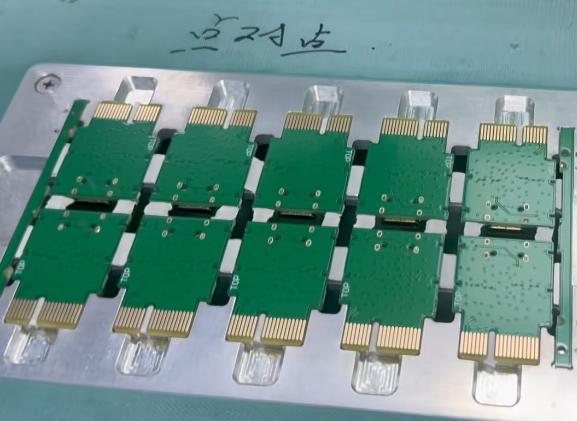
Automotive electronic PCBs are often exposed to fluctuating temperatures, mechanical vibrations, heat and humidity, and electromagnetic interference over long periods; therefore, targeted reliability verification is essential.
Common test items include:
- High/low-temperature operational testing and temperature cycling.
- High-temperature/high-humidity and damp-heat environmental testing.
- Mechanical vibration and mechanical shock testing.
- Thermal shock and solder joint reliability verification.
- Power transient and electromagnetic compatibility (EMC) testing.
- Insulation resistance, withstand voltage, and other electrical safety tests.
It should be noted that reliability testing must be determined based on the specific product application, customer specifications, and relevant automotive industry standards; it is not appropriate to apply a uniform set of test requirements to every PCB.
VI. Key Technical Challenges and Solutions in Automotive PCB Assembly
As the integration level of automotive electronic systems continues to rise, PCB assembly faces increasingly complex manufacturing challenges. New energy vehicles, high-speed communication systems, intelligent driving technologies, and high-power electronic systems, in particular, impose more rigorous demands on manufacturing processes.
High-Density Interconnect (HDI) and Miniature Component Assembly
Automotive electronic control boards increasingly utilize HDI structures, fine-pitch ICs, BGA packages, and miniature passive components.
Such products place high demands on PCB pad design, stencil aperture design, solder paste printing, and placement accuracy.
Solutions include optimizing the Design for Manufacturing (DFM) for the PCB—carefully controlling pad dimensions, stencil thickness, and aperture geometry—and establishing robust inspection mechanisms using Solder Paste Inspection (SPI), Automated Optical Inspection (AOI), and X-ray testing. For complex BGA packages, the soldering process should be optimized by considering pad design, reflow profiles, and specific package characteristics.
High-Power and Thermal Management Issues
Power systems and motor control systems in new energy vehicles involve high currents and significant power conversion, which cause power components to generate substantial heat during operation.
If the PCB copper thickness, thermal management structures, or component layout are poorly designed, it can lead to excessive localized temperature increases, which may compromise both component lifespan and overall system reliability. Therefore, the design and assembly of PCBs for automotive electronics require a comprehensive consideration of copper foil thickness, thermal vias, thermally conductive materials, the layout of power components, and the methods used to connect heat sinks.
For high-power components, it is also necessary to control soldering voids, solder joint thickness, and the quality of thermal interface material application.
Solder Joint Reliability and Mechanical Stress
During operation, vehicles are continuously subjected to vibrations, shocks, and temperature fluctuations, which expose PCB solder joints to thermomechanical stress.
Solder joints for large connectors, heavy components, and high-power devices are particularly susceptible to complex mechanical loads.
During the manufacturing process, solder joint reliability can be enhanced by optimizing component placement, strengthening mechanical fixation, and carefully designing solder pads and soldering processes.
For critical products, design and manufacturing solutions can be further validated through vibration testing, temperature cycling, and failure analysis.
Electromagnetic Compatibility (EMC) and High-Speed Signal Integrity
Advanced Driver Assistance Systems (ADAS), in-vehicle communication modules, and control systems for new energy vehicles typically incorporate high-speed digital circuits, analog sampling circuits, and power switching circuits.
Electromagnetic interference (EMI) can occur between these different circuits, potentially compromising communication stability and the accuracy of signal acquisition.
During the PCB design phase, it is essential to properly plan ground planes, power planes, signal return paths, and the layout of sensitive circuits. During production, consistency must be ensured for impedance-controlled structures, connector soldering, and the placement of critical components.
Finally, the product must undergo verification for EMI, EMS (Electromagnetic Susceptibility), and other relevant electrical performance criteria.
Supply Chain and Component Traceability
Automotive electronic products typically have long lifecycles. Certain specialized chips and automotive-grade components may face challenges such as long lead times, obsolescence, or variations between production batches.
Consequently, PCB assembly service providers must establish robust systems for supplier auditing, material verification, and batch management.
For critical components, strict attention must be paid to sourcing through authorized channels, manufacturer part numbers, batch information, storage conditions, and expiration/shelf-life management to prevent the introduction of unauthorized substitute parts into the production process.
VII. How to Select an IATF 16949-Certified PCB Assembly Service Provider for Automotive Electronics
When selecting a PCB assembly service provider for automotive electronics, one should not judge manufacturing capability solely based on price quotes or the quantity of production equipment. What truly matters is whether a supplier can establish a comprehensive manufacturing system that is stable, traceable, and compliant with automotive industry requirements.
Every stage—from PCB design review and electronic component procurement to SMT assembly, quality inspection, and volume delivery—requires mature engineering expertise and robust quality control capabilities.
For companies in the automotive electronics sector, selecting a PCB assembly partner with automotive-specific quality management experience, well-defined production processes, and a commitment to continuous improvement is essential for ensuring the long-term, reliable operation of their products.
Verifying IATF 16949 Certification
First, confirm that the supplier holds a valid IATF 16949 certification. Verify that the company name, actual production site address, scope of certification, and current validity status on the certificate are correct.
It is important to note that certification of one facility within a corporate group does not automatically extend to all other production sites. Furthermore, check whether the supplier maintains other relevant management systems, such as ISO 9001 or ISO 14001, and whether they can meet specific customer requirements regarding special processes and product quality.
For automotive electronics PCB assembly projects, KingTop Technology should be prepared to undergo customer evaluations covering areas such as quality management systems, production process control, product testing, and supply chain management. For automotive electronics clients, certification is a key criterion for supplier onboarding; however, it must be supplemented by an audit of the actual production facility and the quality management capabilities specific to the project at hand.
Evaluating Automotive Electronics PCB Manufacturing Capabilities
Requirements for PCB assembly vary significantly depending on the specific automotive electronic product.
For products such as BMS (Battery Management Systems), ECUs (Electronic Control Units), ADAS (Advanced Driver Assistance Systems), and automotive power supply units, it is critical to verify that the supplier possesses the necessary capabilities—including SMT, DIP, selective soldering, BGA assembly, conformal coating, and automated inspection.
Additionally, evaluate equipment precision, process stability, production line configuration, and overall production capacity to ensure the supplier can meet requirements for prototype fabrication, engineering validation, and mass production.
KingTop Technology’s automotive electronics PCB assembly services should involve developing tailored manufacturing solutions based on the specific circuit architecture, component packaging, and application environment of each product. For components such as high-density HDI PCBs, complex BGA packages, and high-power control circuits, it is essential to holistically consider placement precision, soldering processes, thermal management structures, and electrical performance to ensure that the PCB assembly meets both product design specifications and application requirements.
Quality Inspection and Traceability Systems
A reliable PCB assembly service provider for the automotive electronics sector must possess a comprehensive quality inspection system—incorporating capabilities such as SPI, AOI, X-Ray, ICT, and FCT—and be able to provide support for reliability verification based on specific product requirements.
Furthermore, a robust traceability mechanism must be in place, covering everything from bare PCBs and electronic components to production work orders, process parameters, and final inspection results.
In the event of a quality anomaly, the supplier should be able to rapidly identify the relevant production batch, material sources, and manufacturing records, while providing a root-cause analysis and corrective/preventive actions via an 8D report.
At KingTop Technology, quality control for automotive electronics PCB projects extends beyond final inspection results; it emphasizes defect prevention during production, the monitoring of process parameters, and the management of quality data. By integrating automated inspection, in-process checks, and functional product testing, the company enhances production consistency and mitigates potential quality risks.
Engineering Support and Supply Chain Management
Automotive electronics PCB projects typically require the collaborative involvement of manufacturing engineering, quality engineering, and procurement teams.
An excellent PCB assembly service provider should offer early-stage support, including DFM (Design for Manufacturability) reviews, BOM risk analysis, guidance on component selection, and process optimization.
For complex HDI PCBs, high-density BGA components, high-power circuits, and products requiring mixed-assembly technologies, the experience of the engineering team directly influences the efficiency of prototype development and the stability of mass production.
KingTop Technology provides comprehensive engineering and technical support for automotive electronics PCB projects, including PCB file reviews, component package verification, analysis of pad and stencil processes, optimization of SMT production strategies, and the identification of manufacturing risks. Additionally, the management of procurement channels for automotive-grade components—including batch tracking, the approval of alternative materials, and the evaluation of supplier quality—is of critical importance. Synergizing engineering design with supply chain management helps minimize material mismatches, process incompatibilities, and production anomalies, thereby enhancing manufacturing efficiency and delivery stability for automotive electronic PCB projects.
Prioritizing End-to-End Management: From Prototypes to Mass Production
Automotive electronic PCB projects typically progress through several stages, including engineering prototypes, design verification, process validation, and mass production.
Suppliers must have robust project management mechanisms in place to support prototype fabrication, trial production reviews, process capability validation, the preparation of Production Part Approval Process (PPAP) documentation, and quality monitoring during mass production.
When undertaking automotive electronic PCB assembly projects, KingTop Technology establishes a comprehensive project management workflow—spanning from initial engineering review to full-scale mass production—tailored to the client’s specific product requirements. During the engineering prototype phase, the focus is on verifying the compatibility between the PCB design and the assembly process. The trial production phase centers on optimizing production parameters, ensuring soldering quality, and analyzing inspection results. Once in the mass production phase, the focus shifts to the continuous monitoring of critical processes, material batches, and product quality data.
For automotive electronic projects requiring PPAP, the necessary documentation—such as process flowcharts, Process Failure Mode and Effects Analysis (PFMEA), control plans, inspection reports, and other production part approval materials—must be prepared in accordance with the client’s requirements.
Only by integrating engineering design, manufacturing processes, quality validation, and supply chain management can one effectively mitigate quality risks throughout the transition from product development to large-scale production.
Summary
IATF 16949-certified PCB assembly services for automotive electronics go beyond mere SMT placement and soldering; they entail the establishment of a comprehensive quality management system that spans product development, material procurement, manufacturing, quality inspection, reliability verification, and batch traceability.
As sectors such as new energy vehicles, intelligent driving, in-vehicle communications, and automotive electronic control systems continue to evolve, automotive PCB assembly will increasingly prioritize high-density manufacturing, power management, thermal reliability, and process consistency.
KingTop Technology offers end-to-end manufacturing support for automotive electronic PCB assembly—ranging from engineering reviews, PCB fabrication, and component procurement to SMT assembly, quality testing, and final product delivery.
For clients with automotive electronics projects, it is advisable to conduct a thorough evaluation of potential manufacturing partners based on their IATF 16949 certification scope, experience in automotive electronics manufacturing, quality inspection capabilities, and track record of project delivery.
For companies in the automotive electronics sector, selecting a PCB assembly partner with mature engineering expertise, a robust quality management system, and consistent delivery capabilities is essential for enhancing product reliability, mitigating supply chain risks, and ensuring successful long-term mass production.