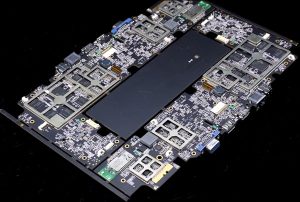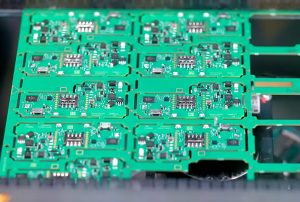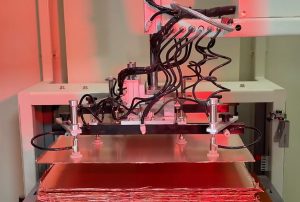

As automotive electronics evolve toward greater intelligence, electrification, and high-level integration, PCBA (Printed Circuit Board Assembly) manufacturing must not only meet precise assembly requirements but also ensure stable production capacity, rigorous quality control, and a comprehensive product traceability system.
As a vital quality management system standard for the automotive industry, IATF 16949 provides a systematic framework for quality management in the manufacturing of automotive-grade PCBA.
For components such as automotive controllers, battery management systems (BMS), in-vehicle communication modules, sensors, and electronic equipment for new energy vehicles, truly reliable PCBA manufacturing depends on more than just SMT (Surface Mount Technology) placement accuracy; it relies on end-to-end management—encompassing material procurement, process design, production assembly, and testing/verification.
This article explores IATF 16949-certified PCBA manufacturing, covering its standard requirements, core production processes, quality control methodologies, and key technologies used in automotive electronics manufacturing.
I. What is IATF 16949-Certified PCBA Manufacturing?
IATF 16949 is a quality management system standard for the automotive industry, developed by the International Automotive Task Force (IATF). Built upon the foundation of the ISO 9001 quality management system, it places a strong emphasis on defect prevention, process control, supply chain management, and continuous improvement.
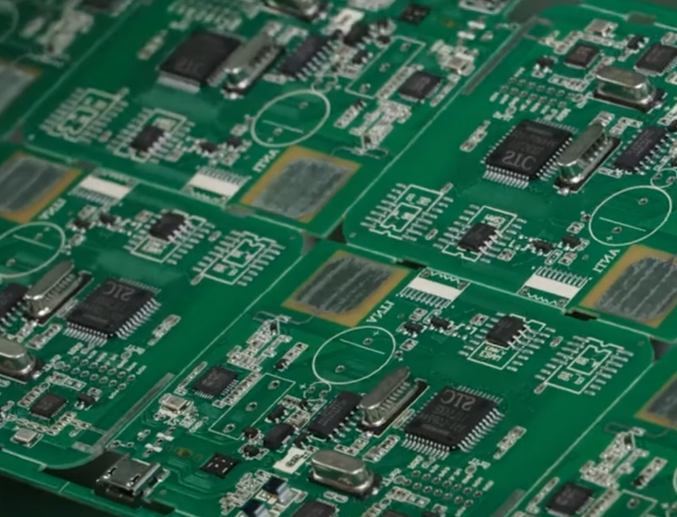
PCBA (Printed Circuit Board Assembly) refers to the process of mounting electronic components onto a PCB—using techniques such as SMT or DIP (Dual In-line Package)—to create a functional circuit assembly.
The core of IATF 16949-certified PCBA manufacturing lies in integrating automotive-industry quality management requirements into the entire electronics manufacturing process.
It focuses not only on whether the final product functions correctly, but also on:
- Whether the production process is stable and controllable.
- Whether electronic components meet specified requirements.
- Whether soldering quality complies with reliability standards.
- Whether production batches are fully traceable.
- Whether potential quality risks are identified in advance.
- Whether robust corrective and preventive mechanisms are in place to address production anomalies.
Compared to the manufacturing of PCBA (Printed Circuit Board Assembly) for general consumer electronics, automotive electronic PCBA typically demands higher standards for long-term stability, environmental adaptability, and batch-to-batch consistency.
II. Why is IATF 16949 Required for Automotive Electronic PCBA Manufacturing?
Automotive electronic systems are directly involved in vehicle operation, energy management, information exchange, and safety control. Any quality issue with an electronic component can affect the performance of the entire vehicle and even pose safety risks.
Therefore, the manufacturing of automotive electronic PCBA cannot rely solely on final inspection; it requires a quality management system that spans the entire production lifecycle.
Enhancing Consistency in the Production Process
Automotive electronic products typically involve long-term supply and continuous mass production. Variations in soldering quality, component parameters, or production processes between different batches can compromise product stability.
IATF 16949 emphasizes process standardization. Through the use of work instructions, control of process parameters, equipment maintenance, and process audits, it minimizes human error and production fluctuations.
Reducing the Risk of Manufacturing Defects
Common PCBA defects include:
- Poor solder joints, cold solder joints, and insufficient solder volume.
- Component misalignment, “tombstoning,” and polarity errors.
- Voids and bridging in BGA (Ball Grid Array) solder joints.
- PCB delamination, warping, and damage to solder pads.
- Abnormal electrical connections and functional failures.
Through process risk analysis, quality inspection, and mechanisms for correcting anomalies, potential issues can be identified early in the production cycle, preventing defects from propagating to subsequent stages.
Establishing a Comprehensive Product Traceability System
Automotive electronic PCBA often require the tracking of PCB batches, component suppliers, production equipment, process parameters, inspection records, and product serial numbers.
A robust traceability system enables manufacturers to quickly isolate problematic batches, analyze the root causes of issues, and implement targeted corrective actions.
Meeting Quality Requirements of the Automotive Supply Chain
Automotive OEMs (Original Equipment Manufacturers) and Tier 1 suppliers typically impose strict quality management requirements on their electronic component suppliers.
The IATF 16949 framework helps PCBA manufacturers establish standardized quality management processes and enhances supply chain collaboration, providing an essential systemic foundation for entering the automotive electronics supply chain. It should be noted that IATF 16949 certification does not automatically qualify a specific PCBA for all automotive-grade product validations; individual products must still meet customer technical specifications and applicable reliability testing requirements.
III. Core Production Processes for IATF 16949-Compliant PCBA Manufacturing
The manufacturing of automotive electronic PCBAs involves multiple interconnected process stages. Any deviation at any stage can impact the electrical performance and service life of the final product.
PCB Design Review and DFM Analysis
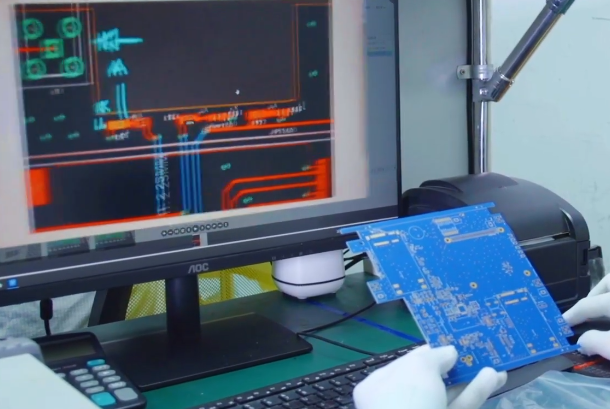
Before full-scale production, a comprehensive review of PCB design files, Gerber files, Bills of Materials (BOM), and assembly drawings is required.
Key areas for review include:
PCB stack-up structure, copper thickness, and dielectric materials.
Trace width, spacing, pad dimensions, and via design.
Alignment between component packages and PCB pads.
High-speed signal integrity, power integrity, and grounding design.
Component placement, thermal management space, and assembly feasibility.
DFM (Design for Manufacturing) analysis helps identify potential conflicts between design and manufacturing early on, reducing the need for rework and mitigating quality risks during production.
For products such as Battery Management Systems (BMS) for new energy vehicles or automotive controllers, special attention must be paid to high-current traces, the placement of power components, heat distribution, and electromagnetic compatibility (EMC) design.
Component Procurement and Incoming Quality Control (IQC)
Automotive electronic PCBAs demand high standards for component quality and supply chain stability.
Manufacturers must establish a robust supplier management system to verify the origin, specifications, batch information, and quality documentation of all components.
Incoming Quality Control (IQC) typically includes:
Verification of component models, specifications, and quantities.
Inspection of appearance, dimensions, and packaging.
Assessment of PCB surface quality and dimensions.
Documentation of batch information for critical components and supplier details.
Verification of essential electrical parameters and solderability.
For critical components—such as MCUs, MOSFETs, power modules, connectors, and automotive-grade chips—stringent controls over procurement channels and batch management are essential to prevent the mixing of parts, the use of incorrect components, or the entry of non-conforming materials into the production line.
Additionally, the management of MSL (Moisture Sensitivity Level) is of critical importance. Moisture-sensitive components must be handled according to specific requirements—including drying, sealed storage, and strict management of the time elapsed after opening—to prevent the “popcorn effect” during the reflow soldering process.
SMT Precision Placement
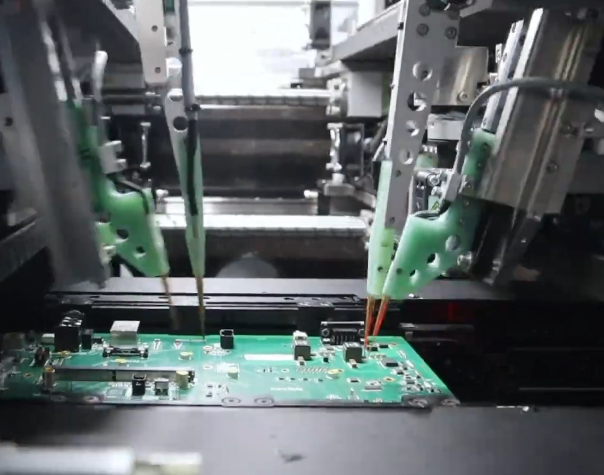
SMT (Surface Mount Technology) is a core process in the manufacturing of PCBA (Printed Circuit Board Assembly) for automotive electronics. It primarily consists of solder paste printing, SPI (Solder Paste Inspection), component placement, and reflow soldering.
Solder Paste Printing: Printing quality is controlled based on stencil aperture design, pad dimensions, and solder paste characteristics. Key objectives include preventing insufficient or excessive solder, misalignment, and solder bridging.
SPI (Solder Paste Inspection): Solder paste inspection equipment is used to measure the volume, height, area, and position of the deposited solder paste, enabling the prompt detection of printing anomalies.
Precision Placement: High-speed placement equipment is used to automatically mount components such as resistors, capacitors, ICs, connectors, and other electronic parts. For fine-pitch components and high-density packages, strict control over placement accuracy and positional deviation is required.
Reflow Soldering: A temperature profile is developed based on the PCB material, the temperature tolerance of the components, and the characteristics of the solder paste. This profile governs the preheating, soaking (constant temperature), reflow, and cooling stages.
Higher reflow temperatures are not necessarily better. Proper thermal process control helps minimize soldering defects while reducing the thermal stress exerted on the PCB, chips, and sensitive components.
DIP (Through-Hole) Assembly and Selective Soldering
Components such as certain connectors, power devices, and large-scale parts—which cannot be mounted via SMT—typically require DIP (Dual In-line Package) or through-hole assembly processes.
Common through-hole components in automotive electronic PCBAs include:
- High-current terminal blocks.
- Power inductors and large capacitors.
- Specialized connectors.
- Transformers and other through-hole components.
Depending on the product structure, assembly may involve wave soldering, selective wave soldering, or manual soldering.
For multi-layer PCBs, mixed-technology boards (containing both SMT and through-hole components), and high-density automotive control boards, selective soldering allows for localized heating of specific solder joints, thereby minimizing unnecessary thermal impact.
PCBA Cleaning and Protective Treatment
Automotive electronic products may operate for extended periods in environments characterized by high temperatures, high humidity, vibration, and dust. Consequently, post-assembly cleaning and protective treatments are equally critical. Depending on product application requirements, specialized cleaning processes may be employed to remove flux residues and other contaminants.
For products requiring adaptation to specific environmental conditions, a conformal coating (protective coating) can be applied, providing:
- Moisture protection.
- Protection against dust and contamination.
- Corrosion resistance.
- Enhanced electrical insulation reliability in complex environments.
It should be noted that conformal coating is not a substitute for sound PCB design or proper sealed enclosure structures. The choice of coating material, application thickness, coverage area, and curing conditions must all be validated through a formal process qualification.
IV. Key Quality Control Techniques for IATF 16949-Compliant PCBA Manufacturing
Quality assurance for automotive electronic PCBAs cannot rely solely on final visual inspections; instead, it requires a multi-layered inspection system to ensure quality throughout the entire manufacturing process.
Automated Optical Inspection (AOI)
AOI utilizes industrial camera systems and image recognition technology to inspect the assembly quality on the surface of a PCBA.
Key detection areas include:
- Missing or incorrect components.
- Polarity errors and component misalignment.
- Solder joint anomalies and solder bridging.
- Component orientation and visible surface defects.
While AOI is well-suited for in-line inspection on SMT production lines and improves the efficiency of defect detection, it cannot directly verify the internal quality of hidden solder joints.
X-Ray Inspection for Internal Solder Joints
For packages such as BGAs and QFNs—where solder joints are located underneath the component and cannot be directly observed—X-ray inspection technology is required.
X-ray imaging allows for the examination of the internal structure of solder joints, enabling the identification of voids, bridging, solder ball anomalies, and other potential defects.
This is particularly critical for high-density chips used in automotive electronic controllers, where X-ray inspection overcomes the limitations of traditional optical inspection methods.
In-Circuit Test (ICT)
In-Circuit Test (ICT) is primarily used to verify the electrical connections and the status of individual components on a PCBA.
Testing parameters include:
Resistance, capacitance, and inductance values.
Open circuits and short circuits.
The status of diodes and certain semiconductor devices.
Connectivity at circuit nodes.
ICT enables manufacturers to rapidly identify assembly and circuit connection issues; it is applicable to PCBA designs that incorporate designated test points and utilize custom test fixtures.
FCT (Functional Circuit Test)
FCT (Functional Circuit Test) verifies the overall functionality of a PCBA by simulating the product’s actual operating environment.
Examples include:
| Product Type | Key Testing Requirements |
| BMS (Battery Management System) Board | Voltage acquisition, temperature monitoring, and communication functions |
| ECU (Electronic Control Unit) Board | Input/output signals, control logic, and communication |
| Automotive Power Supply Board | Voltage conversion, load response, and protection functions |
| Automotive Communication Module | CAN, LIN, Ethernet, and other communication functions |
| Sensor Control Board | Signal acquisition, processing, and output accuracy |
FCT is used not only to detect assembly defects but also to verify that the product meets its specified functional requirements.
Environmental and Reliability Verification
Automotive electronic PCBAs operate in complex environments; therefore, reliability verification plans must be developed based on specific product use cases and customer requirements.
Common verification tests include:
- High/low-temperature operation and storage testing.
- Temperature cycling and thermal shock testing.
- Damp heat and corrosion resistance testing.
- Mechanical vibration and shock testing.
- Solder joint and structural reliability testing.
- Electrical performance and insulation testing.
For automotive electronic products, it is also necessary to consider standards such as ISO 16750, which outlines environmental conditions for electrical and electronic equipment in road vehicles.
The purpose of reliability testing goes beyond simply determining whether a product functions correctly; it is also intended to identify potential performance degradation or failure risks that may arise during long-term operation.
V. Key Quality Management Methods under the IATF 16949 Framework
Beyond production equipment and inspection technologies, a robust quality management system serves as the essential foundation for achieving consistent and stable manufacturing. IATF 16949 emphasizes a preventive approach to quality management; in the context of automotive electronic PCBA (Printed Circuit Board Assembly) manufacturing, this typically involves the integration of the following tools:
APQP: Advanced Product Quality Planning
APQP is primarily utilized during the product development and mass-production preparation phases. Through cross-functional collaboration, it facilitates the planning of product design, manufacturing processes, supply chains, and quality verification, thereby mitigating risks during the new product introduction (NPI) stage.
FMEA: Failure Mode and Effects Analysis
FMEA is used to identify potential failure risks within both the product and the production process. Examples include:
Anomalies in reflow soldering temperatures leading to soldering defects.
Incorrect component polarity resulting in circuit failure.
Suboptimal PCB design causing localized overheating.
Supply chain disruptions for critical components affecting product consistency.
By analyzing the root causes, potential impacts, and risk levels of these failures, organizations can develop appropriate preventive and control measures.
SPC: Statistical Process Control
SPC employs statistical data to monitor the stability of production processes. In PCBA manufacturing, monitoring mechanisms can be established for processes such as solder paste printing, component placement accuracy, reflow soldering parameters, and key inspection metrics. By identifying abnormal fluctuations, manufacturers can make timely adjustments to production processes, thereby reducing the occurrence of batch-related defects.
MSA: Measurement System Analysis
MSA is used to evaluate measurement errors stemming from inspection equipment, measurement methodologies, and operators. For critical dimensions, electrical parameters, and quality inspection data, it is essential to verify that the measurement system possesses sufficient accuracy and repeatability, ensuring that erroneous measurements do not compromise quality assessments.
PPAP: Production Part Approval Process
PPAP is used to demonstrate that a production process is capable of consistently manufacturing products that meet customer requirements.
Depending on customer specifications and applicable standards, this typically includes:
- Product design records.
- Engineering change documentation.
- Process flow diagrams.
- PFMEA (Process Failure Mode and Effects Analysis).
- Control plans.
- Measurement System Analysis (MSA).
- Dimensional and material inspection results.
- Initial process capability studies.
- Sample and product approval records.
These documents help clients understand the design compliance of PCBA products and the manufacturer’s process control capabilities.
VI. Key Technical Challenges in Automotive Electronic PCBA Manufacturing
As the integration level of automotive electronic systems continues to rise, the technical requirements for PCBA manufacturing are also constantly evolving.
High-Density Assembly and Miniaturization
Automotive controllers, intelligent driving modules, and in-vehicle communication equipment increasingly utilize high-density PCB designs.
Components with fine-pitch ICs, BGAs, and QFNs place higher demands on solder paste printing, placement accuracy, and soldering processes.
During manufacturing, factors such as pad design, stencil aperture, component spacing, and thermal distribution must be carefully considered to prevent issues like solder bridging, cold joints, and internal voids.
Thermal Management and High-Current Design
Battery management systems, motor controllers, and onboard power modules in new energy vehicles typically involve high operating currents and power densities.
PCB manufacturing must focus on:
Copper foil thickness and current-carrying capacity.
Layout of power components and heat dissipation paths.
PCB thermal stress and material stability.
Reliability of high-current connectors and solder joints.
Electrical performance under temperature fluctuations (high and low temperatures).
Effective PCB structural design and PCBA assembly processes must work in tandem to meet the product’s thermal management requirements.
Electromagnetic Compatibility (EMC) and Signal Integrity
Automotive electronic equipment involves high-speed digital signals, analog acquisition signals, and power switching circuits.
Improper PCB layout, grounding, or routing can lead to electromagnetic interference (EMI), signal crosstalk, and power supply noise.
Therefore, prior to PCBA manufacturing, it is essential to thoroughly evaluate high-speed signal traces, differential impedance, return paths, power decoupling, and grounding structures.
For interfaces such as CAN, LIN, Automotive Ethernet, and high-speed sensor connections, signal integrity and EMC must be verified against specific system requirements.
Long-Term Stability and Batch Consistency
Automotive electronic products typically have long lifecycles; therefore, manufacturers must ensure consistent quality levels across different production batches.
Achieving this requires not only advanced SMT equipment but also robust process parameter management, comprehensive personnel training, diligent equipment maintenance, effective supplier management, and thorough quality data analysis. True maturity in automotive-grade PCBA manufacturing is demonstrated by stability over long-term production, rather than merely by the test results of a single batch of samples.
VII. KingTop Technology: Automotive-Grade PCBA Manufacturing and Quality Control
As automotive electronics evolve toward higher integration, greater reliability, and increased intelligence, PCBA manufacturers must possess comprehensive technical capabilities—spanning everything from engineering evaluation and production assembly to quality inspection and product validation.
KingTop Technology specializes in engineering and production within the PCB and PCBA manufacturing sector. We provide tailored solutions for automotive electronics projects, encompassing PCB fabrication, electronic component assembly, and specialized technical production support.
In alignment with the IATF 16949 quality management standard, automotive PCBA projects require a rigorous focus on the following areas:
Engineering Design and Manufacturing Evaluation
Based on the PCB files, Bill of Materials (BOM), and assembly requirements provided by the client, we conduct Design for Manufacturing (DFM) analysis. This includes evaluating component placement, pad design, material selection, and potential risks within the production process.
SMT and PCBA Assembly
We develop precise processes—including solder paste printing, high-precision component placement, reflow soldering, through-hole (DIP) assembly, and final assembly—tailored to the specific structural design and component packaging requirements of various automotive electronic products.
Comprehensive Quality Inspection
To ensure product integrity, we employ advanced inspection methods—such as AOI (Automated Optical Inspection), X-Ray, ICT (In-Circuit Testing), and FCT (Functional Circuit Testing)—to verify solder quality, electrical connectivity, and overall product functionality.
Engineering Quality and Reliability Control
We prioritize the meticulous documentation of production processes, including process parameters, material batch tracking, and root-cause analysis of any anomalies. This helps clients mitigate manufacturing risks and ensures high consistency during mass production.
When selecting a PCBA manufacturing partner, automotive clients should look beyond mere processing costs. It is essential to conduct a holistic evaluation of the partner’s engineering support, production management, inspection capabilities, quality management systems, and project delivery track record.
It should be noted that IATF 16949 certification is a quality management system certification with a clearly defined scope of audit.
When selecting KingTop Technology or any other manufacturer, clients should verify the actual certification status, scope, and validity. One should not assume a company holds a specific certification based solely on descriptions of its production processes or quality management systems.
VIII. How to Select an IATF 16949-Certified PCBA Manufacturing Supplier?
Automotive electronic PCBA projects entail stringent quality requirements; therefore, it is recommended that supplier evaluations focus on the following aspects:
| Evaluation Criteria | Key Assessment Areas |
| Quality Management System | IATF 16949 certification status and scope of certification |
| Engineering Capabilities | DFM, DFMEA, PFMEA, and manufacturing process evaluation |
| Manufacturing Capabilities | SMT, DIP, precision soldering, and assembly |
| Inspection & Testing Capabilities | AOI, X-Ray, ICT, and FCT |
| Supply Chain Management | Component sourcing, batch control, and supplier management |
| Traceability Capabilities | Production records, material batch tracking, and inspection data |
| Reliability Validation | High- and low-temperature, vibration, damp heat, and other reliability tests |
In addition, it is essential to evaluate whether a supplier possesses stable mass-production capabilities, robust engineering change management, and mechanisms for continuous quality improvement.
For automotive electronic products involving safety-critical functions, it is further necessary—based on customer requirements and applicable industry standards—to verify compliance with functional safety, product validation, and special process control requirements.
IX. Conclusion
PCBA manufacturing under IATF 16949 certification is more than just a quality management system; it serves as a vital management foundation for ensuring stable production and long-term, reliable operation of automotive electronic products.
From PCB design reviews, component procurement, and precision SMT assembly to inspections (AOI, X-Ray, ICT, FCT) and product reliability validation, clear quality control requirements must be established for every stage of the process.