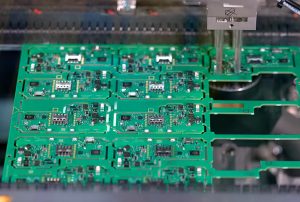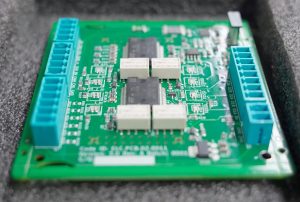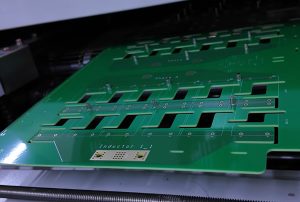

The true challenge in manufacturing electronic control boards (PCBAs) lies in ensuring that every control component operates in stable coordination with the others.
The complexity of an electronic control board is not determined solely by the dimensions of the PCB or the number of components; rather, it is the synergy between various circuit modules that fundamentally dictates product performance.
For instance, a control board for industrial equipment might integrate an MCU (microcontroller unit), power conversion, motor drives, analog signal acquisition, communication interfaces, and protection circuitry. While these functional units may appear independent on a schematic, they are subject to a complex interplay of electrical noise, heat transfer, load fluctuations, and power supply variations once deployed in an actual operating environment.
This is what distinguishes the manufacturing of electronic control boards from standard electronic assembly: a manufacturing facility must go beyond mere component placement—it must possess a deep understanding of the circuit architecture to ensure the final assembly functions exactly as intended.
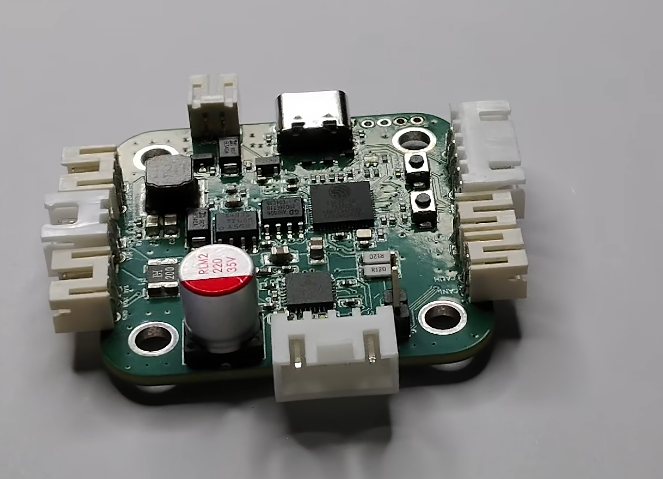
The primary challenge in electronic control board manufacturing: managing the interactions between circuits.
Electronic control boards are rarely single-function circuits; instead, they integrate multiple modules—each with distinct operating characteristics—onto a single PCB.
Among these, the most frequently overlooked issue is mutual interference between modules.
Isolation between power circuits and control circuits
Motor drives, relays, and MOSFET switching circuits generate current fluctuations and transient interference during operation. If the power loops are not properly laid out in relation to the MCU control circuitry or analog sampling lines, it can lead to ADC sampling errors, anomalous control signals, or even unintended system resets.
Consequently, PCB engineering must carefully address current return paths, grounding strategies, the placement of switching nodes, and the routing distances for sensitive signals.
Coordination between analog and digital signals
Sensors—such as those for temperature, pressure, current, or position—typically output weak analog signals, whereas MCUs and communication circuits operate within the digital domain. When these coexist, careful consideration must be given to grounding schemes, filtering circuits, reference voltages, and PCB trace routing.
Power architecture and dynamic load matching
A control board may incorporate multiple voltage domains—such as 12V, 5V, and 3.3V. When load conditions change within communication modules, motor drivers, or actuators, the transient response of the power supply can directly impact the operational stability of other circuits on the board.
Therefore, engineering reviews prior to PCBA manufacturing should extend beyond the Bill of Materials (BOM) and component footprints to encompass power supply design, component placement, and actual operating conditions.
From PCB to PCBA: Key Details That Determine Manufacturing Quality
The manufacturing quality of electronic control boards is often determined by seemingly minor process parameters.
Solder Paste Printing and Fine-Pitch Soldering
For components such as QFNs, LQFPs, and fine-pitch connectors, factors like stencil thickness, aperture ratios, and solder paste release performance directly influence solder joint quality. Excessive solder paste can lead to bridging, while insufficient paste may result in inadequate solder joints.
Utilizing Solder Paste Inspection (SPI) allows for the detection of issues—such as paste misalignment, volume anomalies, or uneven printing—prior to component placement and reflow soldering, thereby preventing defects from propagating to subsequent stages of the production process.
Process Challenges Posed by Mixed-Package Assemblies
A single control board may incorporate a variety of components, including BGAs, QFNs, SOPs, through-hole terminals, and large capacitors. Each package type possesses distinct thermal capacities and specific soldering requirements.
Reflow temperature profiles must be tailored based on the PCB’s thermal capacity, the temperature tolerance of the components, and the characteristics of the solder paste; a “one-size-fits-all” set of parameters is insufficient. For large connectors and specialized through-hole components, factors such as soldering sequence and mechanical stress must also be carefully considered.
Hidden Solder Joints and Internal Defects
The integrity of solder joints for BGAs and components with bottom-side pads cannot be fully assessed through standard visual inspection.
X-ray inspection is essential for identifying issues such as solder ball anomalies, voids, and bridging—though final assessments must always account for the specific package type, process requirements, and applicable industry standards.
Such inspection is particularly critical for high-density, multi-layer, and complex control boards.
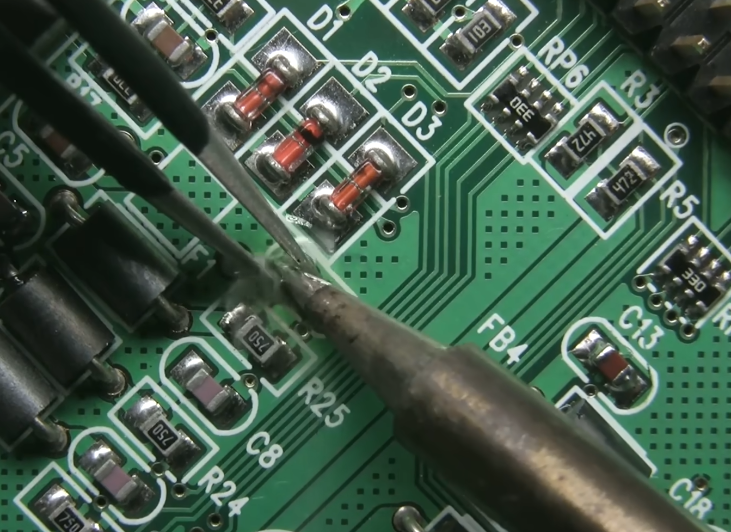
High-Value PCBA Manufacturing: Identifying Discrepancies Between Design and Production
Having accurate engineering documentation does not necessarily guarantee that a product will be easy to manufacture.
In actual production, common issues include:
- Mismatches between PCB pad dimensions and the actual footprints of the components.
- Assembly interference between connectors and mechanical/structural components.
- Uneven distribution of thermal energy during soldering, particularly near large components.
- Insufficient test point placement, which complicates downstream functional testing.
- Obsolescence or long lead times for certain components, necessitating the evaluation of alternative parts.
Discovering such issues only during the mass production stage often leads to increased costs related to rework, PCB redesign, and delayed delivery.
Therefore, a professional PCBA manufacturer must verify all engineering documentation—including Gerber files, Bill of Materials (BOM), coordinate files, assembly drawings, and any special process requirements—before production begins.
For complex control boards, DFM (Design for Manufacturability) and DFT (Design for Testability) assessments should also be conducted, focusing on manufacturability, testability, and potential risks in component supply.
Functional Testing Must Go Beyond Simple Power-On Checks
The primary value of an electronic control board lies in its control functionality, not merely in the completion of electrical circuits.
A PCBA that passes AOI (Automated Optical Inspection) does not necessarily have its control logic, communication performance, or load-handling capacity verified.
Testing protocols should be tailored to the specific application of each product.
For instance, with industrial control boards, key areas for verification include:
- Power input range and the stability of various voltage rails.
- MCU startup, program execution, and watchdog timer response.
- Communication interfaces such as RS485, CAN, and UART.
- ADC sampling accuracy and sensor input response.
- PWM output, relay actuation, and MOSFET driving.
- Protection logic for overcurrent, overvoltage, and short-circuit conditions.
- Temperature rise and operational stability under continuous load.
For volume orders, it is recommended to link critical test results to specific product serial numbers or production batches, creating a traceable manufacturing record.
KingTop Technology: PCBA Manufacturing Support for Complex Electronic Products
Founded in 2004 and headquartered in Shenzhen, China, KingTop Technology specializes in PCB manufacturing and PCBA electronic assembly. The company provides comprehensive manufacturing services—ranging from engineering support to final product integration—for electronic products across various sectors.
For electronic control board projects, KingTop Technology offers more than just SMT (Surface Mount Technology) and DIP (Dual In-line Package) assembly; it integrates PCB fabrication, component procurement, process evaluation, and functional testing into a unified production ecosystem.
Their services include:
- PCB Manufacturing: Production of multi-layer PCBs, as well as boards with diverse structural, material, and process requirements.
- SMT and DIP Assembly: Handling various component package types, mixed-technology assembly, and complex component layouts.
- Engineering and Manufacturing Support: Provision of PCB design support, DFM analysis, and review of production documentation.
- Quality Inspection: Equipped with SPI, AOI, and X-Ray inspection capabilities; ICT and FCT testing can also be configured based on specific project requirements.
- Box Build (System Integration): Provides assembly services for wire harnesses, structural components, enclosures, and electronic modules.
KingTop Technology holds certifications for management systems including ISO 9001, ISO 14001, ISO 13485, and IATF 16949. Our services span various sectors, including industrial electronics, automotive electronics, medical electronics, communication equipment, and smart hardware.
For electronic control board projects requiring customized production, KingTop Technology develops tailored manufacturing solutions based on circuit architecture, component configuration, assembly complexity, and testing requirements—supporting the entire project lifecycle from prototype validation to mass production.
What should you look for when choosing a PCBA (electronic control board) manufacturer?
When selecting a manufacturing partner, it is not advisable to base your decision solely on SMT placement speed or the per-board processing price.
Instead, focus on the manufacturer’s ability to handle non-standard challenges that arise during actual production:
Engineering Comprehension: Can they identify process risks within design files, rather than simply following the documentation blindly?
Experience with Complex Assembly: Do they possess the expertise to handle fine-pitch ICs, hidden solder joints, power components, and mixed-technology (SMT/THT) assemblies?
Comprehensive Testing Capabilities: Can they design testing workflows tailored to the product’s specific functions, rather than offering only basic visual inspections?
Consistency in Mass Production: Do they have robust systems for material traceability, process parameter management, and engineering change control?
These capabilities determine whether a functional prototype can successfully transition into a reliably delivered, mass-produced product.
Conclusion
Manufacturing an electronic control board is more than just converting a Bill of Materials (BOM) into a soldered PCB. It requires seamless coordination between circuit design, component selection, manufacturing processes, signal control, and system validation.
For clients who prioritize product reliability and long-term supply stability, the true value of a PCBA manufacturer lies not just in their production equipment or processing capacity, but in their engineering insight and their ability to solve complex manufacturing challenges.
KingTop Technology continues to provide customers with PCB manufacturing, PCB assembly, and full-unit integration services, helping electronic products transition smoothly from the design phase to stable, large-scale manufacturing.