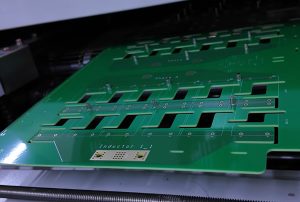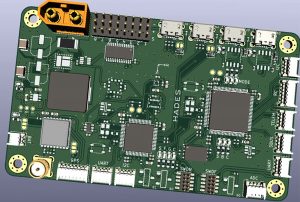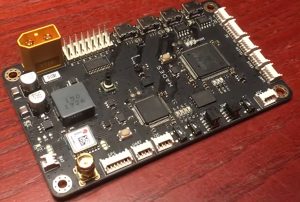

Custom PCBA manufacturing for industrial control: circuit design and precision assembly tailored for complex operating conditions.
The core value of industrial control equipment lies not only in the accuracy of its control logic, but also in the ability of its circuitry to remain stable during long-term operation, within complex electrical environments, and under continuous load conditions.
Products such as PLC controllers, industrial gateways, motion controllers, motor drive modules, and automated inspection equipment impose rigorous requirements on the electrical performance, thermal stability, and manufacturing consistency of their PCBAs.
Unlike PCBAs used in consumer electronics, industrial control PCBAs must often withstand challenges such as wide-temperature operation, electromagnetic interference (EMI), power supply fluctuations, persistent vibration, and long periods of continuous, uninterrupted service.
Consequently, the manufacturing of custom industrial control PCBAs cannot focus solely on component placement and soldering quality; rather, it requires systematic control across the entire spectrum—from product architecture, PCB design, and material selection to the production process itself.
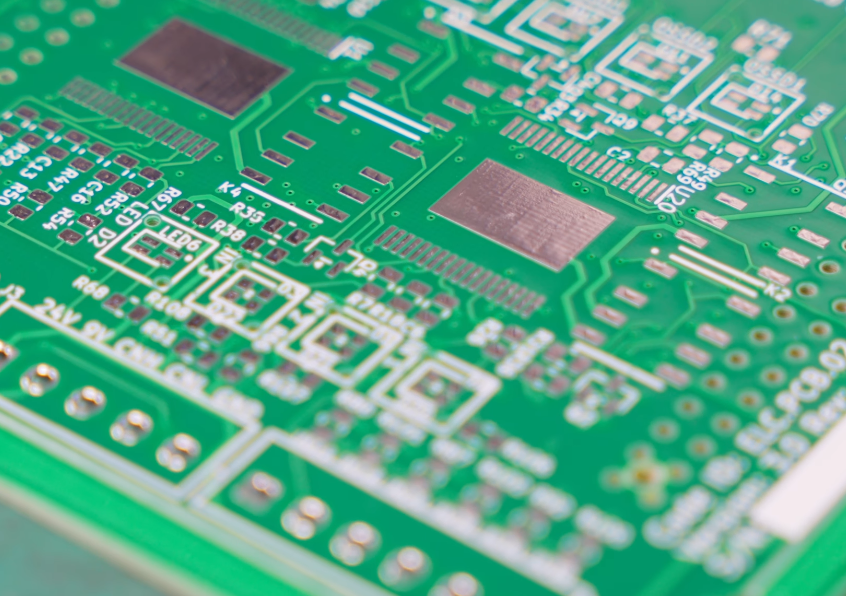
Design Priorities for Industrial Control PCBAs: Stability Over Integration
Industrial control circuits typically consist of a main control unit, power management modules, signal acquisition circuitry, communication interfaces, and actuator drive circuits. Given the complex electrical interconnections between these functional modules, the design phase must thoroughly address signal integrity, power integrity, and the isolation of interference between modules.
Power System Design
Industrial equipment is frequently connected to various types of power supply systems, and some products must also endure startup surges, voltage transients, and load variations. PCBA design should incorporate reverse-polarity protection, overvoltage protection, overcurrent protection, and necessary surge suppression circuitry, tailored to the specific input conditions.
For systems involving multiple voltage domains, careful planning is required for DC-DC conversion, power filtering, and the partitioning of analog and digital power supplies to ensure that noise from switching power supplies does not interfere with sensitive signal acquisition.
Signal Integrity and EMC Design
Industrial control boards may simultaneously process analog signals, digital signals, PWM signals, and high-speed communication signals. PCB layout must focus on controlling the coupling between high-frequency switching nodes, clock traces, and sensitive analog inputs.
For communication interfaces such as RS485, CAN, and Ethernet, it is essential to properly configure terminal matching, common-mode rejection, and ESD protection components, taking into account factors like transmission distance, grounding methods, and the specific operating environment.
Thermal Design and Structural Layout
Power devices, voltage regulators, MOSFETs, and driver ICs are typically the primary heat sources. During the design phase, temperature rise should be evaluated by considering factors such as device power consumption, copper foil area, thermal vias, and the heat dissipation capabilities of the enclosure. This prevents localized heat concentration, which could otherwise lead to degraded device performance or fatigue in solder joints.
PCB Manufacturing and Component Selection: The Foundation for Long-Term Operation
The reliability of PCBA (Printed Circuit Board Assembly) for industrial control applications depends largely on whether the PCB substrate, copper thickness, layer stack-up, and component grades are well-matched to the actual operating conditions.
For control boards handling high currents, copper thickness and trace widths must be determined based on current-carrying capacity and temperature rise requirements. In multi-layer boards, the grounding, power, and signal layers must be carefully planned to minimize electromagnetic interference (EMI) caused by discontinuities in the return current path.
Component selection should not be based solely on cost. For components located in high-temperature zones, power control sections, or critical circuits intended for long-term continuous operation, it is essential to evaluate factors such as operating temperature range, voltage ratings, current margins, package thermal dissipation capabilities, and supply chain stability.
Furthermore, industrial products often have long lifecycles, sometimes requiring maintenance and spare parts support for many years. Consequently, component lifecycle management, the validation of alternative parts, and ensuring batch-to-batch consistency are also vital aspects of the manufacturing engineering process.
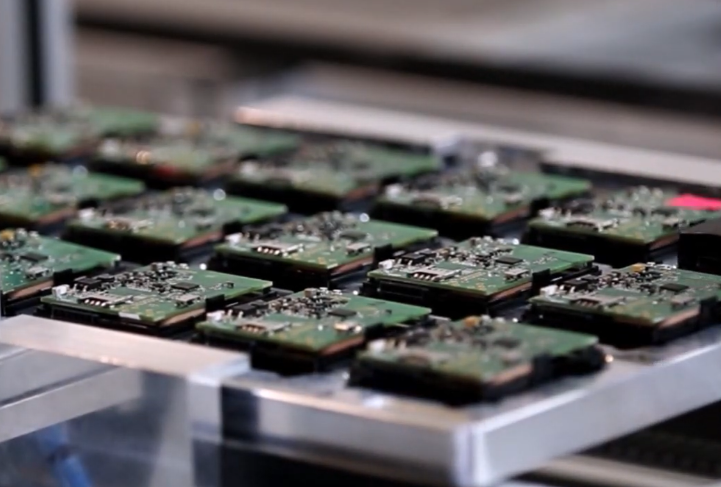
Customized PCB Assembly Processes: SMT, DIP, and Hybrid Assembly Control
Industrial control boards often feature complex component configurations, incorporating surface-mount devices (SMDs)—such as fine-pitch ICs, BGAs, and QFNs—alongside larger components like connectors, relays, transformers, and through-hole (DIP) power devices.
Each package type requires a specific assembly approach.
Precision SMT Assembly
During the SMT production process, stencil aperture designs and solder paste printing parameters must be tailored to the PCB structure, component packages, and pad layouts. For fine-pitch components, particular attention must be paid to controlling the volume of deposited solder paste, printing alignment, and the risk of solder bridging.
Reflow soldering temperature profiles must be optimized by accounting for the PCB’s thermal mass, the temperature tolerance of the components, and the specific characteristics of the solder paste. This helps prevent defects such as cold solder joints, “tombstoning,” insufficient solder, or localized overheating.
DIP Assembly and Selective Soldering
High-current terminals, relays, and certain power components on industrial control boards typically require through-hole (DIP) assembly. For boards utilizing mixed-technology assembly, the SMT and DIP processes must be sequenced logically to minimize the impact of secondary heating on previously formed solder joints and sensitive components.
For PCBs with complex structures or areas requiring localized soldering, selective wave soldering may be employed to enhance soldering consistency and limit the thermal-affected zone.
Special Assembly Requirements
Some industrial control products involve additional assembly tasks, such as installing heavy-duty connectors, mounting heatsinks, securing components with screws, applying conformal coatings, and connecting wire harnesses. These processes require clearly defined operational standards, with strict controls on critical torque values, coating coverage, and assembly clearances.
Quality Inspection for Industrial Control PCBA: From Visual Inspection to Functional Verification
For industrial control products, a passing visual inspection does not signify the completion of the manufacturing process. Effective quality control must encompass solder joint integrity, electrical performance, and overall system functionality.
During the PCBA manufacturing process, KingTop Technology can tailor quality inspection workflows based on product architecture and specific customer requirements:
SPI (Solder Paste Inspection): Measures solder paste volume, height, area, and printing offset.
3D AOI (Automated Optical Inspection): Detects component misalignment, polarity errors, missing parts, and visible soldering defects.
X-Ray Inspection: Evaluates the internal quality of hidden solder joints, such as those found under BGA or QFN components.
ICT (In-Circuit Testing): Verifies circuit connectivity, checks for opens or shorts, and measures specific component parameters based on required test coverage.
FCT (Functional Testing): Validates the control board’s power supply, communication interfaces, I/O functions, and actual operational control capabilities.
Depending on the specific application, industrial control PCBA may also require burn-in testing, temperature rise testing, insulation and withstand voltage testing, as well as vibration or environmental adaptability testing.
It should be noted that the specific inspection items are determined by product risk, design specifications, and customer acceptance criteria; therefore, not every PCBA requires the exact same combination of tests.
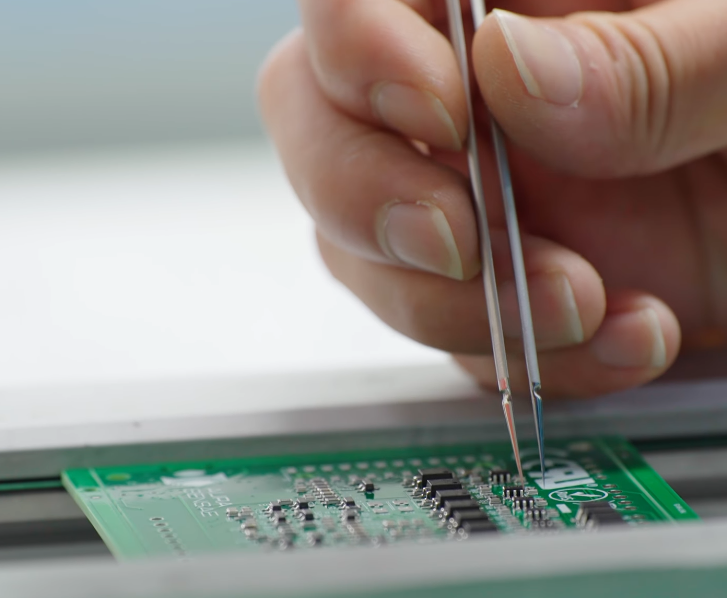
KingTop Technology: Professional Custom PCB and PCBA Manufacturing Services
KingTop Technology specializes in PCB manufacturing and PCB assembly services, providing customized manufacturing support for industrial control systems, smart devices, telecommunications electronics, and high-performance electronic products.
For industrial control projects, KingTop Technology offers comprehensive collaborative manufacturing—encompassing PCB design data, Bill of Materials (BOM) management, component procurement, SMT (Surface Mount Technology) assembly, DIP (Dual In-line Package) insertion, precision soldering, and functional testing.
Throughout the transition from small-batch engineering validation to full-scale mass production, the manufacturing process focuses on material traceability, process parameter stability, and consistent quality across batches.
For products with unique structural designs or complex assembly requirements, the company conducts engineering evaluations based on client-provided Gerber files, BOMs, and assembly documentation. This process identifies potential issues related to pad design, component packaging, thermal management, and overall manufacturability.
KingTop Technology emphasizes the synergy between manufacturing engineering and quality control. Through targeted process planning and rigorous inspection protocols, the company helps clients mitigate production risks and ensures high manufacturing consistency for PCBA products.
Conclusion
The core of PCBA manufacturing for industrial control lies not merely in mounting components onto a circuit board, but in integrating circuit design, material selection, assembly processes, and quality verification into a cohesive manufacturing ecosystem.
PCBA manufacturing solutions must be tailored to specific control architectures, power requirements, and operating environments. Only by fully accounting for real-world application conditions during the design phase—and implementing critical process controls during production—can one deliver electronic control systems that are stable, reliable, and consistent in quality for industrial equipment.
KingTop Technology is dedicated to providing customized PCB and PCBA manufacturing solutions. From initial engineering assessment to precision assembly, the company supports the development and production needs of a wide range of industrial electronic products.