
Custom Electronic Control Board Design: From Functional Requirements to High-Reliability Circuit Implementation.
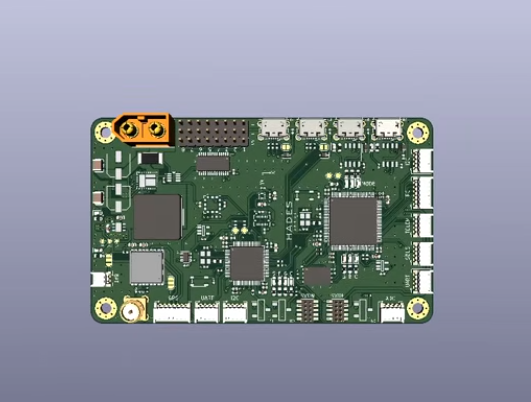
Electronic control boards serve as the core control units for various smart devices, industrial automation systems, and electronic products, handling critical tasks such as signal acquisition, data processing, device actuation, and system communication.
Different application scenarios impose distinct requirements on a control board’s electrical performance, physical dimensions, operational stability, and environmental adaptability. Consequently, custom control board design must not only fulfill functional objectives but also comprehensively account for circuit architecture, component selection, PCB layout and routing, and downstream manufacturing requirements.
I. Core Design Requirements for Custom Electronic Control Boards
Custom electronic control boards are typically developed based on the specific functions and operating environments of the end-use equipment. Before beginning the design process, the following aspects must be clearly defined:
Functional Requirements: Specify control logic, signal inputs/outputs, data processing methods, and the mechanisms for driving actuators.
Electrical Parameters: Determine operating voltage, current, power consumption, interface types, and electrical protection requirements.
Physical Dimensions: Define PCB dimensions, mounting hole locations, connector placement, and the overall form factor based on the available internal space within the device.
Environmental Adaptability: Consider factors such as temperature, humidity, vibration, electromagnetic interference (EMI), and long-term operational conditions.
Expandability: Incorporate provisions for necessary communication interfaces, debugging ports, and resources for future functional expansion.
These parameters directly influence the circuit topology, component configuration, and PCB design strategy.
II. Key Circuit Design for Electronic Control Boards
Main Control Circuit Design
The main control circuit is the heart of an electronic control board, typically utilizing an MCU (Microcontroller Unit), MPU (Microprocessor Unit), or a dedicated control chip to manage device operations and data processing.
Design considerations should focus on processor computing power, memory capacity, GPIO resources, timers, ADC channels, and the configuration of communication peripherals. Furthermore, hardware resources should be allocated efficiently based on specific control tasks to avoid interface shortages or redundant processing capacity.
Power Management Circuit
Power supply design directly impacts the stability and reliability of a control board.
Based on the input voltage and the power requirements of individual functional modules, the design should incorporate appropriate DC-DC converters, LDO (Low-Dropout) regulators, power filtering, and overcurrent protection circuits. For multi-voltage systems, it is also essential to address issues such as noise coupling between different power domains, power-up sequencing, and voltage drops.
Signal Acquisition and Interface Circuits
For inputs from sensors, switches, and analog sources, appropriate signal conditioning circuits must be designed—incorporating filtering, amplification, level shifting, and input protection.
External communication interfaces—such as UART, RS485, CAN, USB, or Ethernet—should be configured based on specific device requirements, with careful consideration given to ESD (electrostatic discharge) protection, electrical isolation, and signal integrity.
Drive and Protection Circuits
For actuators such as motors, solenoid valves, and relays, the selection of MOSFETs, driver ICs, or other power components must be based on the specific characteristics of the load.
Additionally, protection mechanisms—including flyback (freewheeling) diodes, overcurrent protection, overvoltage protection, and reverse-polarity protection—must be implemented to mitigate the impact of inductive loads, power supply anomalies, and transient interference on the control system.
III. PCB Layout, Routing, and Reliability Design
Once the schematic design is complete, PCB layout and routing become critical factors in determining the actual performance of the control board.
Key technical considerations include:
Functional Partitioning: Clearly delineate areas for power supply, digital control, analog signal acquisition, and power driving.
Grounding Design: Plan ground planes based on current return paths to manage high-frequency noise and ground bounce.
Power Trace Routing: Determine trace widths based on load current, copper thickness, and allowable temperature rise.
EMC Design: Optimize filtering, decoupling, grounding, and interface protection to minimize the risk of electromagnetic interference (EMI).
Thermal Management: Evaluate the thermal requirements of power components, incorporating copper pours, thermal vias, and dedicated heatsinking structures where necessary.
For high-density or multi-layer control boards, additional focus is required regarding layer stack-up, impedance control, via placement, and the routing of critical high-speed signals.
IV. Testing and Verification of Custom Electronic Control Boards
Following production, electronic control boards must undergo systematic testing to verify the quality of the design.
| Inspection Item | Main Verification Content |
| AOI Inspection | Missing components, component misalignment, polarity errors, and soldering defects |
| ICT Testing | Open circuits, short circuits, and key electrical parameters |
| X-Ray Inspection | Hidden solder joint quality of BGA, QFN, and other components |
| FCT Functional Testing | Control logic, communication interfaces, and actual functionality |
| Environmental Testing | High and low temperature, temperature cycling, and vibration resistance |
For industrial control systems and equipment intended for long-term operation, it is also necessary to conduct aging tests, ESD (electrostatic discharge) testing, EMC (electromagnetic compatibility) testing, and reliability verification in accordance with product requirements.
V. Synergy Between Design and Manufacturing for Custom Electronic Control Boards
Professional electronic control board development cannot stop at the schematic and PCB file stage; it must also fully account for the feasibility of subsequent manufacturing and assembly.
During the design phase, DFM (Design for Manufacturing) and DFA (Design for Assembly) evaluations should be integrated, with a focus on pad dimensions, component spacing, stencil aperture design, component packaging, and the layout of test points.
By fostering synergy between design and manufacturing, companies can reduce soldering defects, assembly risks, and the need for late-stage engineering changes, thereby improving the efficiency of transitioning from prototype validation to mass production.
VI. KingTop Technology
KingTop Technology (Shenzhen KingTop Technology Co., Ltd.) specializes in PCB manufacturing and PCB assembly (PCBA) services. The company provides comprehensive solutions, ranging from PCB engineering design support and component procurement to SMT (surface-mount technology) assembly, DIP (dual in-line package) insertion, and functional testing.
The company emphasizes the alignment of electronic product design with actual manufacturing processes, offering tailored PCB assembly and custom manufacturing support based on the specific functional requirements, structural dimensions, and operating environments of various types of equipment.
Through rigorous engineering evaluation, production process control, and product testing, KingTop Technology is committed to helping clients enhance the manufacturing quality, operational stability, and development efficiency of their electronic control boards.
Conclusion
The design of custom electronic control boards is a complex technical undertaking that encompasses circuit architecture, component selection, PCB engineering, signal integrity, and manufacturing processes. Only by effectively integrating functional requirements, hardware design, and production validation can one develop electronic control boards that offer stable performance, sound structural design, and suitability for large-scale production.