
A sensor light board is far more than a PCB populated with LEDs, sensors, and control ICs. In electronic products that require reliable operation, the board serves not only as a lighting driver but also as an integrated platform for signal acquisition and control.
Whether used in infrared motion lights, photoelectric detection equipment, smart lighting systems, or industrial automation modules, sensor light boards must coordinate LED driving, signal processing, power management, and thermal distribution within a limited PCB footprint. Poor engineering or manufacturing decisions in any of these areas can affect detection accuracy and long-term operating stability.
Therefore, the core of Custom Sensor Light Board PCB Assembly is not simply component placement. It is the ability to achieve proper integration between circuit design, PCB structure, and real-world application requirements.
1. The Real Engineering Challenge: Balancing Optical, Electrical, and Thermal Performance
In actual PCBA projects, a common issue is that the LEDs illuminate correctly and the sensors respond normally during individual testing, but the complete assembly experiences detection deviations, signal fluctuations, or abnormal temperature increases during operation.
These problems are often not caused by a single component. Instead, they result from insufficient coordination between system design and manufacturing processes.
Optical Layout
The relative positioning of LEDs and photosensitive sensors must be carefully considered to prevent direct light interference between the emitter and receiver. For infrared and photoelectric detection modules, optical layout should also account for wavelength, receiver sensitivity, field of view, and enclosure design.
Electrical Design
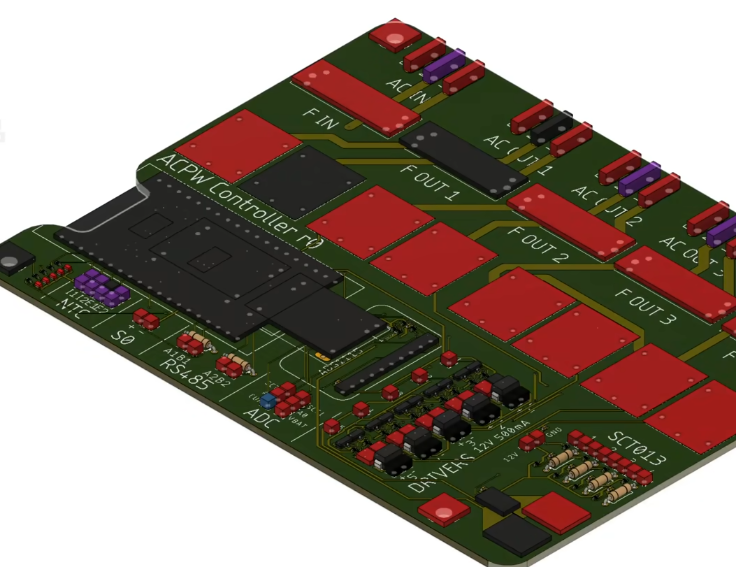
LED driver circuits often involve switching currents and voltage fluctuations, while sensor signals can be relatively weak. Poor PCB routing between power circuits and sensitive signal traces may introduce electrical noise and affect detection accuracy.
PCB engineering should therefore consider power distribution, analog signal isolation, grounding structures, and filtering circuits.
Thermal Management
High-brightness LEDs generate continuous heat during operation. If this heat accumulates near sensors or control ICs, it may cause parameter drift and affect circuit stability.
Thermal design should consider LED power consumption, copper thickness, PCB material, and the actual installation environment.
These engineering issues should be addressed during the PCB evaluation stage rather than after mass production begins.
2. PCB Structure and Component Selection Define Manufacturing Capabilities
PCB material selection for sensor light boards should be based on the specific requirements of the product rather than a standardized approach.
For conventional low-power sensor modules, FR-4 materials generally provide sufficient electrical and mechanical performance. For high-power LED applications, aluminum-based PCBs offer more effective heat dissipation. For products with limited installation space or specialized structural requirements, multilayer PCBs or flexible printed circuits (FPCs) may be more appropriate.
Component selection is equally important.
For LEDs, engineers should evaluate not only rated power and brightness but also color temperature, wavelength, forward voltage, and thermal resistance.
Infrared sensors should be selected according to detection distance, field of view, response speed, and operating environment. Driver ICs and power management components must also match the electrical load and operating characteristics of the complete assembly.
At KingTop Technology, our engineering team can evaluate PCB structures and component configurations based on customer-provided Gerber files, BOM lists, schematics, and technical specifications. This helps identify potential issues involving package compatibility, pad design, and component clearance before production.
3. PCB Assembly: Process Details That Directly Affect Product Quality
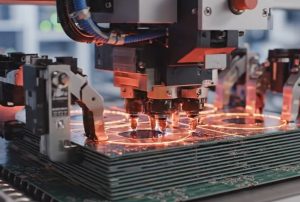
Sensor light boards typically integrate LEDs, precision sensors, driver ICs, and passive components in different package sizes. These components have different requirements for placement accuracy, soldering temperatures, and mechanical stress.
During SMT production, solder paste printing must provide consistent deposition to prevent insufficient solder, bridging, or uneven pad coverage. Small components require accurate placement, while LEDs and components with higher thermal mass may require customized reflow temperature profiles based on their thermal characteristics.
In addition, LED polarity, sensor orientation, and component positioning must strictly follow the design specifications.
For optical components, even when soldering quality is acceptable, incorrect mounting angles may still affect the final optical performance.
For boards containing connectors, larger components, or through-hole devices, DIP assembly, selective soldering, and subsequent assembly processes must also be properly arranged.
High-quality PCBA manufacturing is not determined by the number of machines available, but by how accurately manufacturing parameters are matched to the characteristics of the product.
4. From Prototypes to Mass Production: Consistency Is the Key
A sensor light board functioning correctly during prototype testing does not automatically guarantee stable performance in mass production.
During volume manufacturing, component batch variations, soldering temperature fluctuations, PCB fabrication tolerances, and assembly deviations can all influence the final product.
PCBA manufacturing therefore requires inspection procedures that correspond to the functional requirements of the product.
At KingTop Technology, we can implement SPI, AOI, X-Ray, ICT, and FCT inspection processes according to product complexity and customer acceptance requirements.
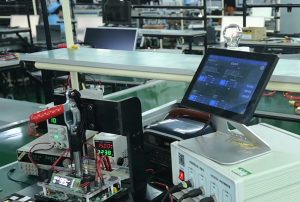
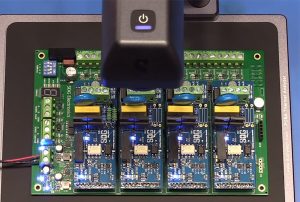
Among these methods, FCT (Functional Circuit Testing) is particularly important. In addition to verifying LED illumination and power output, testing can evaluate sensor response, trigger thresholds, signal output, and control logic according to the product design.
For products requiring extended operating life, additional temperature rise, aging, and environmental validation can also be considered.
The purpose of inspection is not simply to identify defective assemblies. More importantly, test data helps identify manufacturing deviations and improve consistency across different production batches.
5. KingTop Technology: Customized PCB and PCBA Manufacturing Solutions
KingTop Technology specializes in PCB manufacturing and PCB assembly, providing customized manufacturing support for smart electronics, industrial control systems, sensor modules, and other electronic products.
For sensor light board projects, our focus extends beyond completing the assembly process. We emphasize the compatibility between product design and actual manufacturing requirements.
From PCB engineering evaluation and component sourcing to SMT placement, DIP assembly, soldering inspection, and functional testing, KingTop Technology provides manufacturing services tailored to individual project requirements.
For products with different levels of complexity, we can support customers with DFM analysis, BOM verification, and process optimization to help minimize manufacturing issues originating from the design stage.
Whether the project involves a standalone sensor light board, an integrated LED sensing module, or a customized PCBA with specialized dimensions and structural requirements, the manufacturing solution should always be developed around the product’s actual technical specifications.
Conclusion
Sensor light board PCB assembly involves a combination of optical engineering, electrical design, thermal management, and precision manufacturing.
A mature manufacturing solution must consider manufacturability during the design stage, maintain process control throughout assembly, and verify product performance through functional testing.
KingTop Technology is committed to providing reliable customized PCB and PCBA manufacturing services, helping customers ensure that every sensor light board not only meets its design specifications but also delivers stable performance in real-world operating environments.