
Custom Aluminum-Based PCBA: Key Controls from Thermal Management Design to Precision Assembly.
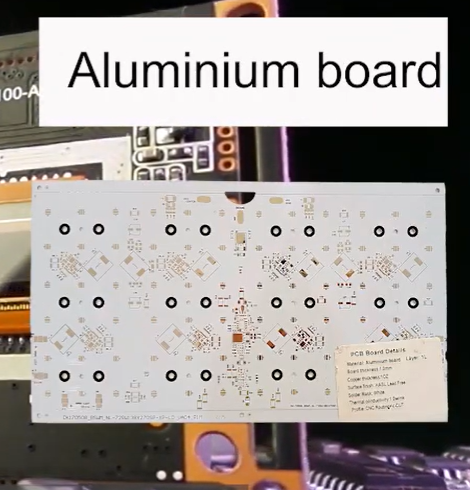
The value of an aluminum-based PCB (printed circuit board) lies not merely in replacing the substrate of a traditional PCB with an aluminum plate; rather, it creates a more efficient thermal conduction path through the combination of a metal base and an insulating, thermally conductive dielectric layer.
For high-power LEDs, industrial power supplies, power controllers, and energy management equipment, the heat dissipation capability of the PCB often directly influences the operating temperature, performance stability, and service life of the electronic components.
However, in the PCBA manufacturing process, thermal design is only the starting point. Material structure, soldering processes, component layout, and thermal stress control must all be integrated into a cohesive manufacturing strategy.
Structural Characteristics of Aluminum-Based PCBA
A typical aluminum-based PCB consists of three layers:
Copper Foil Circuit Layer: Responsible for electrical connections and current transmission; its design depends on operating current, trace width, and copper thickness.
Insulating, Thermally Conductive Layer: Positioned between the copper layer and the aluminum base, this layer must provide both electrical insulation and stable thermal conductivity.
Aluminum Base Layer: Acts as a mechanical support and a medium for heat diffusion, transferring localized heat to a heatsink or external structure.
The insulating, thermally conductive layer is a critical factor influencing overall thermal performance. Parameters such as thermal conductivity, dielectric thickness, and voltage withstand capability must be selected based on the product’s power requirements and operating voltage—simply assuming that a higher thermal conductivity is always better is not an appropriate criterion.
Three Key Manufacturing Challenges in Custom PCBA
(1) Thermal Design and Component Layout
Components that generate significant heat—such as power MOSFETs, LEDs, and rectifiers—should be positioned with careful consideration of the heat source distribution. Beyond the power consumption of individual components, it is essential to evaluate the cumulative thermal effect when multiple heat sources operate simultaneously.
For high-power products, the thermal path from key heat-generating components to the effective heat dissipation area should be as short as possible, while also ensuring sufficient space for the installation of a heatsink.
(2) SMT Soldering and Thermal Balance Control
The aluminum base layer alters the thermal response characteristics of the PCB assembly. During reflow soldering, factors such as the board structure, the thickness of the aluminum base, the area of the copper foil, and the distribution of components can all affect temperature uniformity.
Consequently, reflow soldering parameters typically used for standard FR-4 PCBs cannot be applied directly. Before production, it is essential to verify the temperature profile—taking into account the specific board materials and the temperature tolerance of the components—with a focus on the heating rate, time above liquidus, peak temperature, and the cooling process. This helps mitigate risks such as cold joints (poor wetting), “tombstoning,” and inconsistent solder joint quality.
(3) Insulation and Long-Term Operational Reliability
The insulating, thermally conductive layer in an aluminum-based PCB serves to provide electrical isolation. For high-voltage or high-power applications, it is necessary to verify the voltage withstand rating, the insulation structure, and the required safety clearances.
Furthermore, components and solder joints are subjected to thermo-mechanical stress during repeated temperature fluctuations. For industrial equipment intended for long-term operation, it is necessary to conduct temperature cycling, powered load testing, and other essential reliability assessments based on specific application requirements.
Process Integration: From PCB Fabrication to PCB Assembly
Custom aluminum-based PCBA is not merely a standalone SMT (Surface Mount Technology) assembly process; rather, it requires the coordination of multiple manufacturing stages.
During the initial DFM (Design for Manufacturing) review, it is critical to verify the design of pad dimensions, component footprints, board-edge processing, mounting holes, and thermal management structures. During the production phase, attention must be paid to the flatness of the aluminum substrate, surface cleanliness, the quality of solder paste printing, and component placement accuracy.
For products featuring complex double-sided aluminum-based structures or specialized interconnect designs, the insulation structure and manufacturing feasibility must be evaluated in advance; standard PCB via and interlayer connection methods cannot simply be applied here.
Following assembly, depending on product requirements, processes such as AOI (Automated Optical Inspection), X-ray inspection (where applicable), electrical testing, and functional testing should be performed to verify solder quality, circuit connectivity, and operational performance.
KingTop Technology: Custom Aluminum-Based PCBA Manufacturing
KingTop Technology specializes in PCB fabrication and PCB assembly services. We collaborate with clients to evaluate and implement customized manufacturing solutions tailored to their specific requirements—including electrical performance, thermal management, physical dimensions, and operating environments. For aluminum-based PCB projects, KingTop Technology places great emphasis on the seamless integration between PCB structure and downstream assembly. We develop manufacturing processes tailored to specific product requirements—encompassing everything from initial DFM (Design for Manufacturing) analysis, component selection, and procurement support to SMT assembly, soldering quality control, and final product testing.
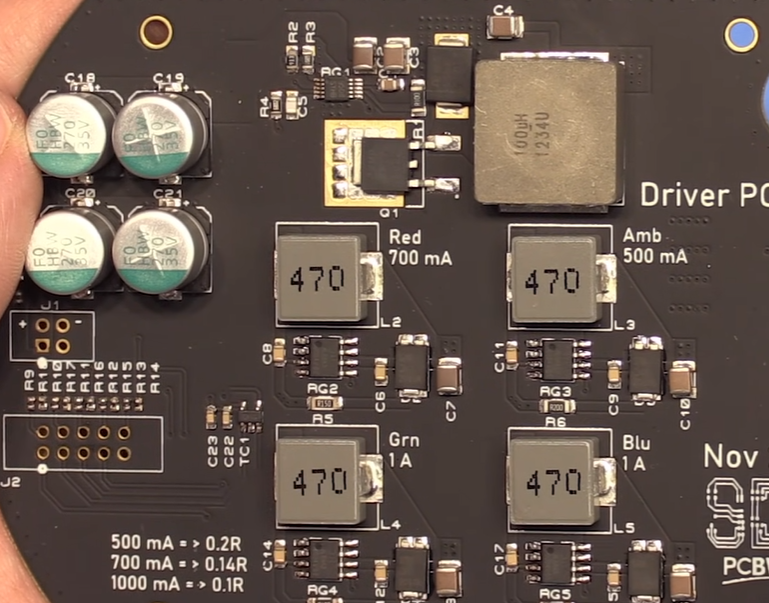
Whether for LED lighting driver boards, industrial power control boards, or other high-power electronic components, the right choice of materials and manufacturing processes is the essential foundation for achieving stable PCBA products.
Conclusion
The challenge in manufacturing aluminum-based PCBAs lies in simultaneously meeting requirements for electrical performance, thermal conductivity, insulation safety, and soldering reliability.
A truly mature, customized solution must account for the product’s actual operating conditions by integrating PCB structural design with PCB assembly processes from the outset—rather than waiting until the assembly stage to address heat dissipation or manufacturing issues.
By coordinating PCB fabrication with PCB assembly, KingTop Technology provides customized manufacturing support for diverse application needs, helping clients transform their design concepts into more stable and manufacturable electronic products.