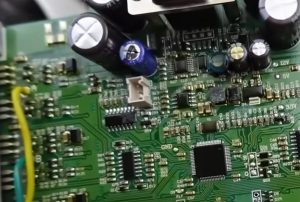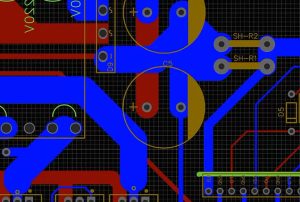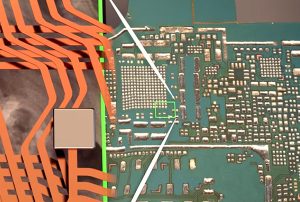

With the continuous development of industrial automation, smart manufacturing, power electronics, and automotive electronics in Brazil, high-precision controllers are becoming increasingly important in industrial equipment, energy management systems, intelligent instruments, and automated production lines. As a core component of electronic control systems, the quality of PCB (Printed Circuit Board) design and assembly directly affects the operating accuracy, response speed, and long-term stability of controllers. Consequently, the Brazilian market has increasingly demanding requirements for PCB assembly processes, product consistency, and quality control.
1. Technical Requirements for High-Precision Controller PCB Assembly
High-precision controllers typically integrate microprocessors, MCUs, analog signal processing chips, power management ICs, communication modules, and various precision sensors. These electronic components require accurate placement, reliable soldering, and stable electrical connections. This is particularly important for multilayer PCBs, high-density component layouts, and complex circuit designs, where even minor assembly deviations can affect the overall performance of the control system.
Therefore, PCB assembly must take into account component packaging, pad design, circuit layout, impedance control, and thermal management requirements. Through optimized manufacturing processes and strict production parameter control, manufacturers can ensure that PCBs meet the operational requirements of high-precision controllers in demanding working environments.
2. SMT Placement and Precision Soldering Processes
Surface Mount Technology (SMT) is one of the most important processes in high-precision controller PCB assembly. By combining automated solder paste printing, high-precision component placement, and reflow soldering, manufacturers can achieve fast and accurate installation of miniature electronic components.
During production, a suitable stencil is first manufactured according to the PCB design files. Solder paste is then accurately deposited onto designated pads using an automated printing machine. Next, high-precision pick-and-place equipment positions each electronic component according to its specified coordinates and orientation. Finally, a multi-zone reflow oven controls the heating, soaking, and cooling processes to create stable and reliable solder joints.
For high-precision controller PCBs containing BGA, QFN, QFP, and fine-pitch IC components, special attention must be paid to the reflow temperature profile, component coplanarity, and solder joint quality. For larger connectors and through-hole components, DIP assembly and wave soldering can also be incorporated to meet different structural and electrical requirements.
3. Quality Inspection in the PCB Assembly Process
High-precision controllers are often required to operate continuously over extended periods. Therefore, comprehensive quality inspection is an essential part of the PCBA manufacturing process.
Professional PCB assembly manufacturers typically use multiple inspection technologies to verify product quality at different production stages:
- SPI (Solder Paste Inspection): Checks solder paste thickness, volume, and printing alignment to reduce potential soldering defects.
- AOI (Automated Optical Inspection): Identifies component misalignment, missing components, incorrect placements, and visible soldering defects.
- X-Ray Inspection: Examines hidden solder joints, particularly those found in BGA and QFN packages.
- ICT (In-Circuit Testing): Checks electrical connections, component parameters, and potential short circuits or open circuits.
- FCT (Functional Circuit Testing): Verifies power management, signal processing, communication interfaces, and the overall operating functions of the controller.
By implementing a multi-level inspection system, manufacturers can identify potential problems during production, reduce defective products, and improve consistency and reliability in mass production.
4. Specific PCB Assembly Requirements for the Brazilian Market
Brazil has a wide range of industrial applications, including agricultural machinery, energy equipment, industrial automation, automotive manufacturing, and infrastructure development. Different operating environments place different technical requirements on high-precision controller PCBs.
For example, industrial control equipment requires excellent anti-interference capabilities and long-term operating stability. Power electronic devices require particular attention to current-carrying capacity, electrical insulation, and thermal management. Meanwhile, agricultural machinery and outdoor control systems must withstand environmental factors such as temperature fluctuations, humidity, dust, and mechanical vibration.
To address these requirements, manufacturers can select appropriate PCB materials, surface finishes, and protective processes according to the actual operating conditions of each product. For example, conformal coating can help improve resistance to moisture, dust, and certain corrosive environmental conditions in suitable applications. In addition, optimizing PCB layouts and thermal management structures can further improve controller performance and service life.
Furthermore, electronic products intended for the Brazilian market should be evaluated against applicable RoHS, IEC, and relevant INMETRO regulatory or certification requirements, depending on the product category and distribution channel, to ensure compliance with the appropriate market access standards.
5. KingTop Technology: Your Professional PCB Manufacturing and PCB Assembly Partner
In high-precision controller PCB assembly, choosing a manufacturing partner with comprehensive production capabilities and an effective quality management system is essential for successful product development and long-term manufacturing.
KingTop Technology, established in 2004 and headquartered in Shenzhen, China, is a professional electronic manufacturing company specializing in PCB manufacturing and PCB assembly. With extensive experience in the electronics manufacturing industry, the company provides a wide range of services, including PCB design support, PCB fabrication, electronic component sourcing, SMT assembly, DIP assembly, product testing, and final product assembly. KingTop Technology offers integrated PCB and PCBA manufacturing solutions to customers worldwide.
In terms of manufacturing capabilities, KingTop Technology is equipped with automated SMT production equipment to support the assembly of miniature components, including 01005 packages, as well as high-density packages such as BGA and QFN. The company also provides SPI, AOI, X-Ray, ICT, and FCT inspection services to help maintain manufacturing quality and improve product reliability and consistency.
KingTop Technology also places strong emphasis on engineering support and supply chain management. Starting with customer-provided Gerber files, BOM lists, and component placement files, its engineering team can perform Design for Manufacturability (DFM) analysis to identify potential issues in PCB design, component selection, and manufacturing processes.
By integrating PCB fabrication, electronic component sourcing, and PCB assembly, KingTop Technology helps customers simplify supply chain management and improve overall project efficiency.
In addition, KingTop Technology operates under quality management systems associated with ISO 9001, ISO 14001, ISO 13485, and IATF 16949. Quality control and process requirements can be evaluated and implemented according to the specific needs of different projects.
For customers in Brazil, whether they require high-precision industrial controller boards, power management PCBs, or intelligent control electronics, KingTop Technology can provide manufacturing support tailored to individual project requirements, from prototype development to volume production.
6. Conclusion
High-precision controller PCB assembly in Brazil involves much more than precision SMT placement and soldering. It also requires comprehensive quality inspection, professional engineering support, and a stable electronic component supply chain. With the continued growth of industrial automation and intelligent electronic devices, PCB manufacturers must continuously improve production accuracy, process stability, and quality management to meet the technical requirements of different industries.
With years of experience in PCB and PCBA manufacturing, KingTop Technology is committed to providing global customers with integrated electronic manufacturing services, covering PCB design support, PCB fabrication, component sourcing, SMT assembly, and functional testing.
Supported by professional engineering expertise, automated production equipment, and multi-level quality inspection processes, KingTop Technology provides reliable, flexible, and cost-effective PCB assembly solutions for customers in Brazil and other international markets, helping businesses improve product quality and strengthen their competitiveness.