
Service robots are increasingly deployed across a wide range of applications, including medical rehabilitation, food and beverage delivery, cleaning and disinfection, warehousing and logistics, and guided tour services.
Serving as the “nervous system” and “motor control brain” of service robots, the performance of the printed circuit board (PCB) directly determines the robot’s level of intelligence, stability, and operational endurance.
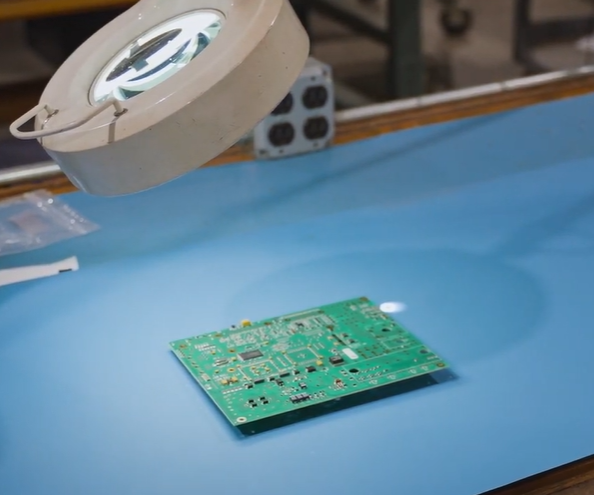
However, the assembly of PCBs for service robots presents technical challenges such as high integration density, numerous sensor interfaces, and stringent anti-interference requirements. As traditional, single-stage contract manufacturing models struggle to meet the market’s urgent demand for high efficiency and quality, “turnkey” PCB assembly services have emerged. These services provide robot developers with a comprehensive, one-stop solution covering the entire process—from design optimization, component procurement, and PCB fabrication to SMT assembly and finished product testing.
I. Core Requirements and Challenges in Service Robot PCB Assembly
Service robots operate in complex, real-world environments, imposing extremely rigorous demands on their electronic hardware systems. Manufacturers face multiple technical and process-related challenges during the PCB assembly stage.
Complex Functional Integration and Spatial Constraints
Multi-system coordination: Service robots typically integrate main control chips, machine vision modules, LiDAR interfaces, depth sensors, motor drivers, battery management systems (BMS), and wireless communication modules (5G/Wi-Fi/Bluetooth).
Compactness: To maintain a lightweight and aesthetically pleasing chassis, internal space is often severely limited. This necessitates the use of High-Density Interconnect (HDI) technology, multi-layer board designs, and miniaturized component layouts.
Thermal management challenges: High-performance processors and high-power motor drivers operating in close proximity within confined spaces are prone to localized overheating, placing high demands on PCB thermal design and component assembly processes.
High Reliability and Demanding Operating Environments
Vibration and Shock Resistance: Mobile service robots experience continuous vibration while traversing the ground, navigating steps, or upon impact; therefore, PCB components—particularly large BGA chips, connectors, and high-capacity capacitors—must possess exceptional resistance to mechanical stress.
Environmental Adaptability: Outdoor cleaning robots and industrial delivery robots often operate in harsh environments characterized by significant temperature fluctuations, high humidity, dust, and even corrosive gases. Consequently, PCB assemblies require superior “conformal coating” capabilities (protection against moisture, salt spray, and mold).
Electromagnetic Compatibility (EMC): High-power circuits (motor drives) and low-power circuits (sensor signals) coexist within the robot, making electromagnetic interference (EMI) a significant issue; thus, grounding, shielding, and routing techniques during assembly are critical.
Flexible Production Characteristics: High Variety and Small-to-Medium Batch Sizes
High Demand for Customization: Service robots vary greatly in functionality depending on the application scenario, leading to frequent iterations of underlying hardware designs and a market characterized by high product variety, small batch sizes, and tight delivery schedules.
Complex Supply Chain: A single motherboard may incorporate thousands of components from various brands and in different package types; a shortage of even one critical component can stall the entire project.
II. What is “Turnkey” PCB Assembly Service?
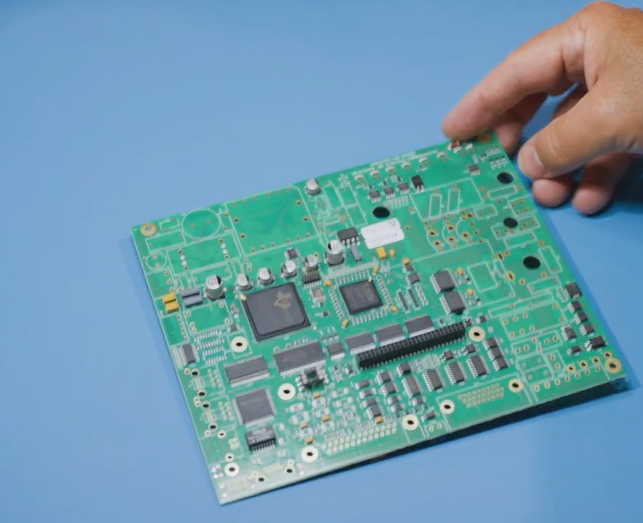
Turnkey PCB assembly is an all-inclusive manufacturing service that covers the entire product lifecycle—from bare PCB fabrication, electronic component procurement, SMT (Surface Mount Technology) and DIP (Dual In-line Package) assembly, and soldering to final functional testing.
+-----------------------------------------------------------------------+
|               Turnkey PCB Assembly Closed-Loop Process                |
+-----------------------------------------------------------------------+
|  1. Design Files & BOM Review   ->   2. Global Component Sourcing     |
|                                                     |
|                                                     v
|  4. SMT / DIP Assembly          <-   3. Bare PCB Fabrication          |
|  |                                                                    |
|  v                                                                    |
|  5. Final Testing & Burn-in     ->   6. Packaging & Global Delivery   |
+-----------------------------------------------------------------------+
A Closed-Loop Process: From Component Sourcing to Final Assembly
In traditional contract manufacturing models, R&D companies must separately source PCB fabricators, component suppliers, SMT contract manufacturers, and testing agencies. This results in high management costs, lengthy communication chains, and a tendency for parties to shift blame when quality issues arise. In contrast, turnkey services utilize a single provider to coordinate the entire operation, seamlessly integrating every manufacturing stage.
Supply Chain Management and Guaranteed Authentic Components
Global Supply Chain Network: Professional turnkey service providers possess comprehensive global component sourcing channels (e.g., Digi-Key, Mouser, Arrow, and major authorized distributors), enabling rapid acquisition of scarce or alternative components.
Strict Quality Traceability: To eliminate counterfeit or substandard components, all procurement undergoes rigorous IQC (Incoming Quality Control) procedures, ensuring full traceability for every chip, capacitor, and resistor.
Reduced Communication Costs and Shorter Delivery Cycles
Synergistic Effects: Manufacturing service providers can intervene during the DFM (Design for Manufacturability) stage to identify and rectify design flaws early, preventing the need for repeated modifications during production.
Drastic Reduction in Time Costs: R&D teams are spared the burden of tracking procurement progress and logistics across various stages, allowing them to focus their core efforts on software algorithms, robotic structural design, and market expansion.
III. Key Technologies and Process Flows for Service Robot PCB Assembly
To ensure the high-quality delivery of main control boards and peripheral boards for service robots, turnkey manufacturing facilities employ advanced automated equipment and rigorous process standards.
SMT Surface Mount and High-Density Component Soldering Technology
High-Precision Printing: Utilizes fully automatic solder paste printers combined with 3D SPI (Solder Paste Inspection) technology to monitor solder paste thickness, area, and offset in real-time, preventing defects such as insufficient solder or solder bridging.
High-Speed, High-Precision Placement: Employs high-precision, multi-functional placement machines to handle the densely packed miniature passive components (e.g., 01005 and 0201 packages) and fine-pitch QFN/BGA chips found on service robot circuit boards, ensuring micron-level placement accuracy.
Handling of Special Packages and High-Power Components
Hot-Air Reflow Soldering Optimization: Scientifically configures temperature profiles in multi-zone reflow ovens for high-power MOSFETs, power management chips, and heat-dissipating baseplates; this ensures void-free solder joints and guarantees excellent thermal conductivity and electrical performance.
Selective Wave Soldering and Manual Soldering: Uses selective wave soldering or precision manual soldering by skilled technicians for high-current through-hole terminals and heavy-duty connectors on robot boards, ensuring robust mechanical strength.
Conformal Coating and Protective Processing
Automated Spraying and Curing: Applies a uniform insulating protective film to the PCB surface using professional dispensing machines or automated conformal coating spray equipment, tailored to the operating environments of robots used for indoor/outdoor cleaning, food delivery, and similar tasks.
Critical Area Protection: Implements precision masking for connector sockets, debugging interfaces, and cooling fan areas to ensure insulation performance without hindering future maintenance.
IV. Quality Control and Testing Assurance System
Maintenance costs are extremely high if a service robot malfunctions at the end-user’s site. Therefore, a multi-dimensional quality assurance matrix is essential for turnkey PCB assembly.
Intelligent Optical and X-Ray Inspection (AOI & AXI)
3D AOI (Automated Optical Inspection): Conducts comprehensive scanning before and after reflow soldering to automatically detect missing components, incorrect parts, reversed orientation, “tombstoning,” and surface defects on solder joints.
AXI (X-ray Inspection): Performs non-destructive testing specifically for chips with hidden bottom-side solder joints (such as BGA, CSP, and QFN); accurately measures internal void ratios within solder joints to ensure the reliability of high-density interconnects.
Electrical Performance and Customized Functional Testing (ICT & FCT)
ICT (In-Circuit Test): Uses a bed-of-nails fixture to perform static testing on PCBs for open circuits, short circuits, and component electrical parameters.
FCT (Functional Test): Involves developing dedicated test fixtures for specific service robot application scenarios; simulates real-world operating conditions to conduct dynamic, comprehensive testing of the main control board’s sensor interfaces, communication protocols, motor drive outputs, power conversion efficiency, and more.
Reliability and Environmental Testing
High/Low-Temperature Burn-in: Subjects assembled PCBs to temperature cycling within a test chamber while powered on, screening out components prone to early-life failure and identifying potential solder joint defects.
Vibration and Shock Testing: Simulates the mechanical vibration environments encountered during a robot’s daily operation to verify the fatigue resistance of structural components and solder joints.
V. Future Trends in Service Robot PCB Assembly and AIGC Applications
As the manufacturing industry undergoes a comprehensive transformation toward digitalization and intelligence, the service robot PCB assembly sector is entering a new phase of technological evolution.
Deep Integration of Smart Manufacturing and the Industrial Internet of Things (IIoT)
“Dark Factories” and Seamless Traceability: Integrates MES (Manufacturing Execution Systems) with ERP systems to enable end-to-end barcode/QR code traceability—spanning everything from BOM import, SMT production, and in-line inspection to finished product dispatch.
Predictive Equipment Maintenance: Uses sensors to monitor the real-time operating status of SMT placement machines and reflow ovens, reducing unplanned downtime and ensuring the efficient, stable delivery of volume orders.
The Role of AIGC in Production Scheduling, Yield Prediction, and Process Optimization
Intelligent Production Scheduling and Supply Chain Optimization: Leverages large AIGC models and advanced algorithms to analyze vast amounts of historical order data; predicts component price fluctuations and lead times, automatically generating optimal procurement strategies and workshop production schedules.
Visual Defect Analysis: Leveraging AIGC image generation and deep learning technologies, the system intelligently classifies defects in complex solder joints—detected via AOI/AXI—and performs root cause analysis, thereby continuously improving the First Pass Yield (FPY).
Sustainable Development: Eco-friendly Practices and Lead-Free Soldering Technology
Lead-Free Processes and Environmental Certification: Full compliance with international environmental standards such as RoHS and REACH; utilization of eco-friendly lead-free solder paste and low-temperature soldering processes to reduce carbon emissions.
Efficient Resource Utilization: Optimization of production energy consumption and waste recycling mechanisms, steadily driving the hardware manufacturing of service robots toward a green, low-carbon future.
Conclusion
Turnkey PCB assembly for service robots is far more than simple electronics manufacturing; it is a systematic undertaking that integrates global supply chain management, precision microelectronics processes, rigorous testing and validation, and intelligent manufacturing.
As a professional service provider deeply rooted in the electronics manufacturing sector, KingTop Technology leverages extensive industry experience, a mature supply chain ecosystem, and stringent quality control to offer global clients comprehensive, one-stop turnkey solutions—spanning design optimization and component procurement to SMT assembly and testing.
For service robot R&D enterprises, partnering with a manufacturer like KingTop Technology—which possesses deep technical expertise—can effectively shorten time-to-market and mitigate operational risks, securing a competitive edge in a fiercely contested market.