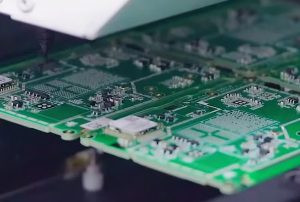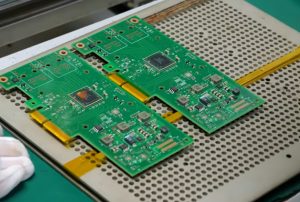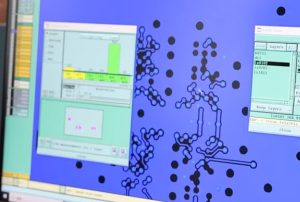

Custom robotics PCB assembly is a complex systems engineering process involving high precision, multidisciplinary integration, and rigorous quality control.
With the rapid advancement of artificial intelligence, embodied AI, and service robots, the pace of hardware iteration has accelerated unprecedentedly.
This places exacting demands on PCB design, component selection, SMT (Surface Mount Technology) placement, DIP (Dual In-line Package) insertion, conformal coating, and functional testing of the complete unit.
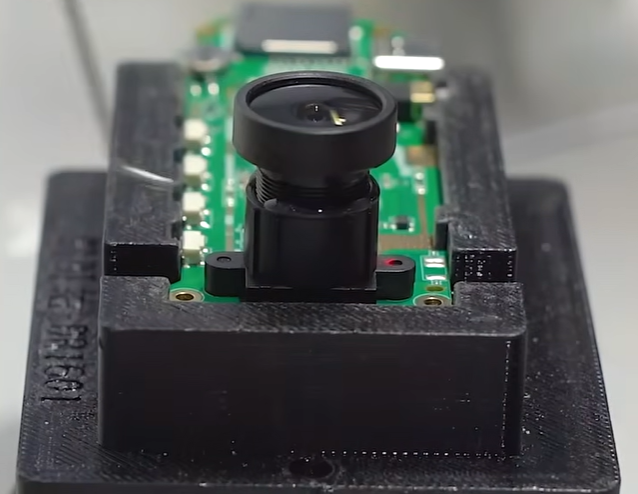
The following is a systematic, in-depth analysis of the entire process, core technologies, and key quality control points for custom robotics PCB assembly services.
I. Core Requirements and Technical Challenges in Robotics PCB Assembly
The electronic systems within robots typically comprise main control units, sensor interfaces, motor drives, power management systems, and communication modules. Due to the diverse application scenarios for robots—such as industrial, medical, service, or outdoor inspection roles—PCB assembly faces multifaceted technical challenges.
High-Density and Miniaturized Layouts
Modern robots prioritize lightweight and compact structures. PCBs often utilize multi-layer designs (ranging from 6 to over 12 layers), High-Density Interconnect (HDI) technology, or even rigid-flex configurations to fit within confined mechanical spaces.
The extensive use of fine-pitch components (such as BGA, QFN, and 0201/01005 packages) places stringent demands on stencil aperture design, solder paste printing precision, and reflow soldering temperature profile control.
Rigorous Electromagnetic Compatibility (EMC) and Interference Immunity
Inside the robot chassis, the frequent starting and stopping of high-power motors and the coexistence of high-frequency switching power supplies with low-voltage sensors create a high risk of electromagnetic interference (EMI).
During PCB assembly, factors such as grounding layout, the soldering precision of shielding cans, and the placement of decoupling capacitors in close proximity to components directly determine signal stability and control accuracy for the entire unit.
Mechanical Stress and Environmental Adaptability
Robot operation involves high-frequency vibration, mechanical shock, and fluctuations in temperature and humidity. Assembly facilities must employ reinforcement processes—such as underfilling, adhesive bonding of components, and selective conformal coating—to prevent solder joint cracking or failure caused by fatigue.
II. Detailed Overview of the Custom Robot PCB Assembly Process
To ensure the delivery of highly reliable products—from schematic design to the finished board—professional PCB assembly services typically encompass the following six standardized stages:
[DFM/DFA Review] ➔ [Component Procurement & Supply Chain Management] ➔ [SMT Surface Mount] ➔ [DIP Through-Hole & Wave Soldering] ➔ [Coating & Reinforcement] ➔ [Functional Testing & Burn-in]DFM (Design for Manufacturability) and DFA (Design for Assembly) Review
Before full-scale production, a team of senior engineers conducts a comprehensive review of the client-provided Gerber files, Bill of Materials (BOM), and structural drawings. Key areas of inspection include the rationality of pad designs, stencil aperture alignment, component spacing (ensuring safe clearance for soldering), and panelization optimization. This proactive approach prevents manufacturing defects—such as cold joints, solder shorts, or bridging—at the source.
Component Procurement and Supply Chain Control
Robot control boards often incorporate specialized components, such as high-performance MCUs/DSPs, FPGAs, high-precision ADCs/DACs, isolation chips, and high-power MOSFETs.
Authorized Sourcing: Procurement is strictly limited to original manufacturers or Tier-1 authorized distributors, completely eliminating the use of refurbished or loose/unverified new parts.
Rigorous IQC (Incoming Quality Control): X-ray inspection is used to verify the internal structure of BGAs; part numbers and date codes are cross-checked; and solderability tests ensure components are in optimal condition.
SMT (Surface Mount Technology) Process
This is the core stage of PCB assembly.
Solder Paste Printing: High-precision, fully automatic printers are used in conjunction with 3D SPI (Solder Paste Inspection) systems to monitor solder paste thickness, area, and alignment offset in real-time.
High-Speed Placement: A combination of general-purpose and high-speed placement machines is used to accurately mount miniature passive components (resistors/capacitors), ICs, and odd-form components. Multi-zone Reflow Soldering: Temperature profiles are scientifically configured based on lead-free processes (e.g., SAC305 solder paste) to ensure peak temperatures and soak times meet specifications, thereby preventing thermal damage to components or cold solder joints.
In-line AOI (Automated Optical Inspection): Multi-angle optical scanning rapidly identifies surface defects such as missing components, incorrect parts, misalignment, and reversed polarity.
DIP (Through-Hole) and Post-Soldering Processes
For through-hole components that cannot be processed via SMT—such as high-power inductors, electrolytic capacitors, connectors (e.g., aviation plugs, pin headers/sockets), and relays—manual assembly, wave soldering, or selective wave soldering is employed to ensure mechanical structural integrity.
Special Protection and Reinforcement Processes (for Harsh Robotic Operating Conditions)
Dispensing and Underfill: Underfill is applied to BGA and CSP chips subjected to high stress or vibration to dissipate thermal and mechanical stresses.
Conformal Coating: Brush, spray, or selective coating processes are used to apply a protective film to the PCB surface, providing resistance against water, moisture, dust, and salt spray.
Rigorous Testing and Programming
ICT (In-Circuit Testing) and FCT (Functional Testing): Comprehensive verification of electrical performance, short circuits, open circuits, and dynamic operating states is conducted using bed-of-nails fixtures or dedicated test jigs.
Firmware Programming: Firmware programming and calibration are performed concurrently during the testing phase.
Burn-in Testing: High-load robotic operating environments are simulated, and high/low-temperature cycling is used to screen out components prone to early-life failure.
III. Quality Management and Assurance System for Robotic PCB Assembly
High-quality customization relies not only on advanced equipment but also on a robust quality management system:
Full-Process Traceability System (MES): Barcodes or QR codes enable end-to-end traceability, covering everything from raw material batch numbers, SMT equipment parameters, and operator details to final test results.
ESD Control: The assembly workshop strictly maintains constant temperature and humidity and utilizes anti-static flooring, ESD wrist straps, and ion fan monitoring to protect sensitive semiconductor chips from electrostatic discharge (ESD) damage.
International System Certifications: We prioritize manufacturing service providers holding certifications such as ISO9001 (Quality Management System), ISO13485 (Medical Device Quality Management System), and IATF16949 (Automotive Quality Management System).
IV. How to Choose a Reliable Custom Robot PCB Assembly Service Provider?
When evaluating assembly service providers, consider the following dimensions:
Flexible Manufacturing Capabilities (Low-Volume, High-Mix): Robot R&D often requires rapid prototyping and small-to-medium batch trial production; therefore, a supplier’s ability to perform quick line changes and maintain flexible production is crucial.
Experience Handling Irregular Components: Robot circuit boards often feature custom heatsinks, specialized interfaces, and bulky transformers, requiring suppliers to have extensive experience in the mixed assembly of irregular components.
Technical Support and Responsiveness: Top-tier suppliers proactively offer DFM (Design for Manufacturability) optimization suggestions, assist clients in resolving soldering yield bottlenecks, and help shorten R&D cycles.
V. Conclusion
With the rapid evolution of embodied AI and robotics technology, PCB assembly has transcended the scope of traditional electronics manufacturing, evolving into a highly integrated, rigorous, and sophisticated system engineering process.
From initial DFM/DFA assessments and the precise placement of high-density HDI and rigid-flex boards to specialized reinforcement and conformal coating for high-frequency vibration and harsh environments, and finally to comprehensive burn-in testing—every step is critical to the stability and operational success of the robot control system.
As a leading global provider of electronics manufacturing and assembly services, KingTop Technology is dedicated to delivering one-stop, highly reliable, and customized PCB assembly (PCBA) solutions for clients in robotics, industrial automation, and smart hardware. Robust Engineering and DFM Capabilities: KingTop Technology boasts a team of seasoned engineers who engage deeply in DFM/DFA reviews during the early stages of a project. By assisting clients in optimizing circuit layouts and mitigating manufacturing risks, the company significantly shortens the cycle from NPI (New Product Introduction) prototyping to mass production.
Flexible Manufacturing and Rigorous Quality Control: Whether for high-mix, low-volume R&D testing or large-scale, high-quality mass production, KingTop Technology utilizes industry-leading fully automated SMT lines alongside 3D SPI, in-line AOI, and 3D X-Ray inspection equipment. By integrating stringent quality management systems (such as ISO9001 and IATF16949) with comprehensive MES traceability, the company ensures that every robot control board delivered to the client offers impeccable electrical stability and interference resistance.
Extensive Expertise in the Robotics Industry: KingTop Technology has accumulated a wealth of practical experience in the manufacturing and ruggedization of main control boards for service robots, drive boards for AGVs/AMRs, integrated drive-and-control boards for robotic arm joints, and various high-precision sensor modules. This expertise enables the company to effectively address challenges such as thermal management, high-frequency vibration, and electromagnetic compatibility (EMC).
In an era of rapid iteration for robotics hardware, selecting a manufacturing partner with strong technical capabilities, rapid responsiveness, and uncompromising quality is crucial. KingTop Technology remains committed to serving as a trusted, solid backbone for robotics enterprises through exquisite manufacturing craftsmanship, rigorous supply chain management, and exceptional technical services—working together to propel the intelligent robotics industry to new heights.