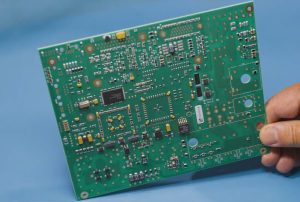

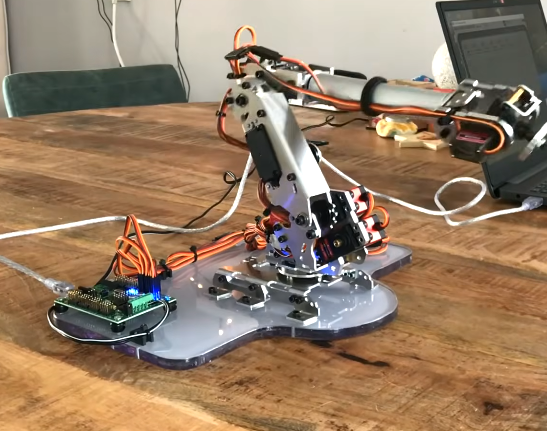
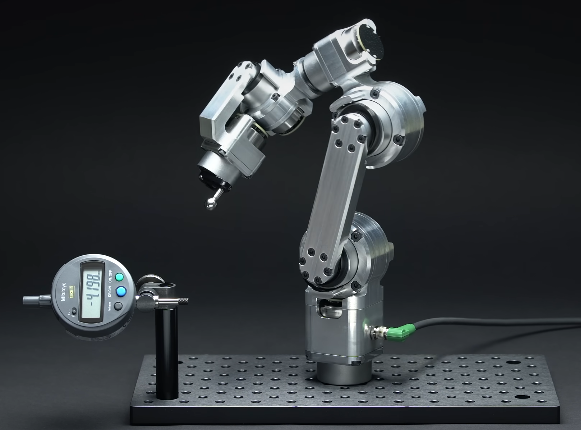
Robotic arms play an increasingly pivotal role in modern industrial automation, intelligent manufacturing, and precision electronics assembly. As the “nervous system” of the robotic arm, the internal Printed Circuit Board (PCB) design and assembly process directly determine the equipment’s stability, precision, and lifespan.
From heavy-duty industrial robotic arms to agile collaborative robots, the performance of every high-end robotic arm relies on precision, reliable PCB design and high-standard SMT (Surface Mount Technology) assembly.
I. Key Challenges in Robotic Arm PCB Design and Assembly
Before delving into the manufacturing process, it is essential to understand the unique operating environments of robotic arms. Compared to standard consumer electronics, PCB design for robotic arms faces far more rigorous electrical and mechanical demands:
High-Vibration and High-Impact Environments: Robotic arms generate intense mechanical vibration during high-speed operation, frequent start-stop cycles, and heavy-load handling. This necessitates vibration-resistant component layouts and solder joints with sufficient mechanical strength to prevent fatigue-induced cracking.
Complex Routing and Spatial Constraints: Space within robotic arm joints is extremely limited. PCBs often require custom shapes (such as circular, annular, or irregular forms) to fit the joint geometry, posing significant challenges for circuit layout, routing density, and thermal management.
Strong Electromagnetic Interference (EMI): Robotic arms are typically driven by high-power servo motors, accompanied by high-frequency switching power supplies and rapidly changing currents. With control boards, drive boards, sensor signal lines, and power lines in close proximity, Electromagnetic Compatibility (EMC) design is critical; rigorous shielding, filtering, and grounding measures are mandatory.
Real-Time Performance and High Reliability: Industrial robots typically require control command responses within the millisecond range. Even minor signal delays or packet loss can lead to positioning errors or safety incidents. Therefore, high-quality substrates and components must be selected to ensure a zero-failure rate during long-term, high-intensity operation.
II. Advanced Strategies for Robotic Arm PCB Design
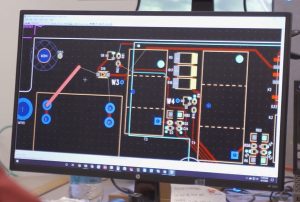
High-quality assembly begins with excellent design. Throughout the PCB design process for robotic arms, engineers must adhere to a set of industry best practices to ensure the circuit board performs reliably in extreme environments.
Collaborative Structural and Layout Design
Robotic arm joints feature compact structures; consequently, PCB design often requires close collaboration with 3D mechanical models (such as SolidWorks or Creo files).
Zoned Layout: Strictly isolate high-voltage power sections, control cores, analog signal acquisition areas, and digital communication zones to prevent high-current loops from causing crosstalk with weak sensor signals.
Component Reinforcement: For large or heavy components (e.g., electrolytic capacitors, connectors, transformers), standard surface-mount or through-hole mounting is often supplemented by mechanical fixing points or adhesive bonding to withstand shear stress caused by prolonged vibration.
Stack-up Design and Power Integrity
Robotic arm control boards typically utilize multi-layer designs (e.g., 6, 8, or more layers) to optimize power and ground planes.
Impedance Control: Strictly control characteristic impedance (usually 50Ω single-ended or 100Ω differential) for high-speed buses—such as EtherCAT, CAN bus, and differential encoder signals—to minimize signal reflection.
Decoupling Capacitor Configuration: Strategically place decoupling capacitors of varying values near chip power pins to filter out high-frequency noise and ensure voltage stability for core processors (e.g., DSPs, FPGAs, high-performance MCUs) during transient current surges.
Thermal Design and Heat Dissipation Paths
Localized temperature rises are significant within robotic arms, particularly inside enclosed joint housings.
Thermal Via Arrays: Design dense arrays of thermal vias beneath power components (e.g., MOSFETs, motor driver chips) to rapidly conduct heat to the copper heat-spreading layers or aluminum substrates on the opposite side.
Isolation of Heat-Sensitive Components: Position temperature-sensitive components (e.g., crystal oscillators, precision voltage references) away from heat sources to maintain measurement accuracy across a wide operating temperature range.
III. Precision Assembly and Manufacturing Process Flow
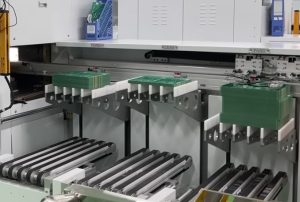
Once the precision PCB design is finalized, the process moves to the manufacturing and assembly stages. Modern PCB assembly facilities utilize highly automated, intelligent production lines to ensure every circuit board meets industrial-grade quality standards.
Solder Paste Printing and SPI (Solder Paste Inspection)
The first step in assembly is high-precision stencil printing of solder paste. Facilities typically employ fully automated printers with vision alignment to ensure the solder paste covers the pads evenly and fully. Subsequently, an SPI (Solder Paste Inspection) system immediately performs a 3D scan of the print quality, monitoring solder paste thickness, volume, and offset in real-time to intercept defects at the source.
High-Speed SMT and Micro-Component Assembly
PCB assemblies often feature a large number of micro-components (such as 0201 and 01005 packages), high-density BGAs, QFNs, and various precision connectors.
High-Precision Placement: High-speed, multi-function pick-and-place machines combined with high-resolution vision recognition systems achieve micron-level placement accuracy.
BGA and Odd-Form Component Handling: For complex Ball Grid Array (BGA) packages, reflow profiles are strictly controlled to ensure every solder ball forms a perfect alloy bond. Odd-form connectors that cannot be handled by standard pick-and-place machines are installed via manual precision insertion or specialized automated equipment.
Reflow Soldering and Thermal Profile Optimization
Reflow soldering is a critical stage that determines solder joint quality. Facilities customize multi-zone reflow profiles based on PCB thickness, copper weight, and the thermal characteristics of the components. By precisely controlling temperature gradients across the preheat, soak, reflow, and cooling zones, soldering defects such as cold joints, bridging, and tombstoning are effectively eliminated.
AOI (Automated Optical Inspection) and X-Ray Inspection
Following the soldering process, the PCB must undergo rigorous multi-stage optical and internal radiographic inspections:
In-line AOI: High-speed, fully automated scanning using multi-angle optical lenses to detect visual defects such as missing components, reversed polarity, standing components (“tombstoning”), and misalignment.
X-Ray Non-Destructive Testing: For packages with hidden bottom-side solder joints—such as BGA and CSP—X-ray equipment penetrates the chip package to clearly reveal internal solder ball voiding and bridging, ensuring that hidden joints are equally flawless and reliable.
Conformal Coating and Dispensing/Curing
Since robotic arms often operate in complex industrial environments characterized by humidity, dust, oil, and even corrosive gases, PCB assemblies typically require conformal coating protection.
Automated Spraying: Precision CNC spraying equipment applies a uniform layer of insulating, moisture-resistant, and salt-spray-resistant coating (acrylic, polyurethane, or silicone resin) to the PCB surface.
Critical Area Masking: Precise masking or programmed avoidance is applied to areas requiring electrical conductivity or thermal transfer—such as connector sockets and heatsink surfaces—ensuring a perfect balance between protection and functionality.
IV. Quality Control and Rigorous Testing Standards
To ensure that every robotic arm operates trouble-free for years after delivery, the PCB assembly plant has established a closed-loop quality control system that spans the entire process.
First Article Inspection (FAI): Before mass production begins, the first unit undergoes rigorous verification and measurement of all dimensions and functions.
ICT (In-Circuit Testing) and FCT (Functional Testing):
ICT: Checks for open circuits, short circuits, and component parameter values.
FCT: Simulates the robotic arm’s actual operating electrical environment; control commands are sent to the control board to verify that core functions—such as communication speed, PWM output, and sensor data acquisition—fully meet specifications. Environmental Stress Screening (ESS) and Aging Tests: For robotic arm motherboards requiring high reliability, processes such as high/low-temperature cycling aging tests and vibration screening are typically employed. These steps serve to trigger and eliminate components prone to early-stage failure, ensuring the final products possess exceptional robustness.
V. Conclusion
The PCB design and assembly of robotic arms represent more than just an electronics manufacturing task; they embody a deep integration of mechanical structure, electrical performance, and manufacturing processes.
From initial vibration-resistant layout and electromagnetic compatibility (EMC) design to the final stages of precision SMT assembly, X-ray inspection, and protective coating application, every step places rigorous demands on the manufacturer’s technical expertise and production capabilities.
As a global leader in smart manufacturing and electronics assembly solutions, KingTop Technology specializes in providing one-stop Electronics Manufacturing Services (EMS). Our offerings span the entire value chain—from high-end PCB design, component selection, and high-precision SMT assembly to rigorous functional testing.
Leveraging advanced automated production lines, an experienced R&D team, and a strict quality management system, KingTop Technology delivers outstanding customized manufacturing solutions for industrial automation, smart robotic arms, and various precision electronic devices. We empower our partners to achieve a dual advantage in quality and efficiency within the fiercely competitive global market.